
Katalyst EMS Training
Designing a reassuring and successful first workout for a physically intense connected fitness product.
Overview
01/08Katalyst Fitness redefines at-home workouts with its groundbreaking Electrical Muscle Stimulation (EMS) technology, combining innovative hardware and software to deliver a unique fitness experience. To support users in embracing this first-of-its-kind system, I partnered with the team to create a thoughtful, user-centric onboarding journey. From unboxing the EMS suit to completing the first workout, every step was designed to inspire confidence, reduce friction, and ensure users could seamlessly transition into their fitness routine with Katalyst.
A shipped product with a broken first hour. Onboarding happened in person or over Zoom when I started. A self-service walkthrough from unboxing to first workout when I finished.
"Kevin brought maturity, perspective, and passion to evolving our products at Katalyst. In addition to refining our design language, Kevin revamped our onboarding experience with our product. What I appreciated most was Kevin's end to end thinking, mapping out the user journey from when they see our product from the first time outside of the app all the way to completing their first workout. He partnered directly with our engineers to bring the designs to life, balancing the engineering cost and design changes to ensure we build and ship experiences on time. Finally Kevin brought maturity to our design process through establishing design crit and consistently gathering and addressing feedback from all stakeholders in the company."
 VP of Product, Katalyst Fitness
Purchase to first workout
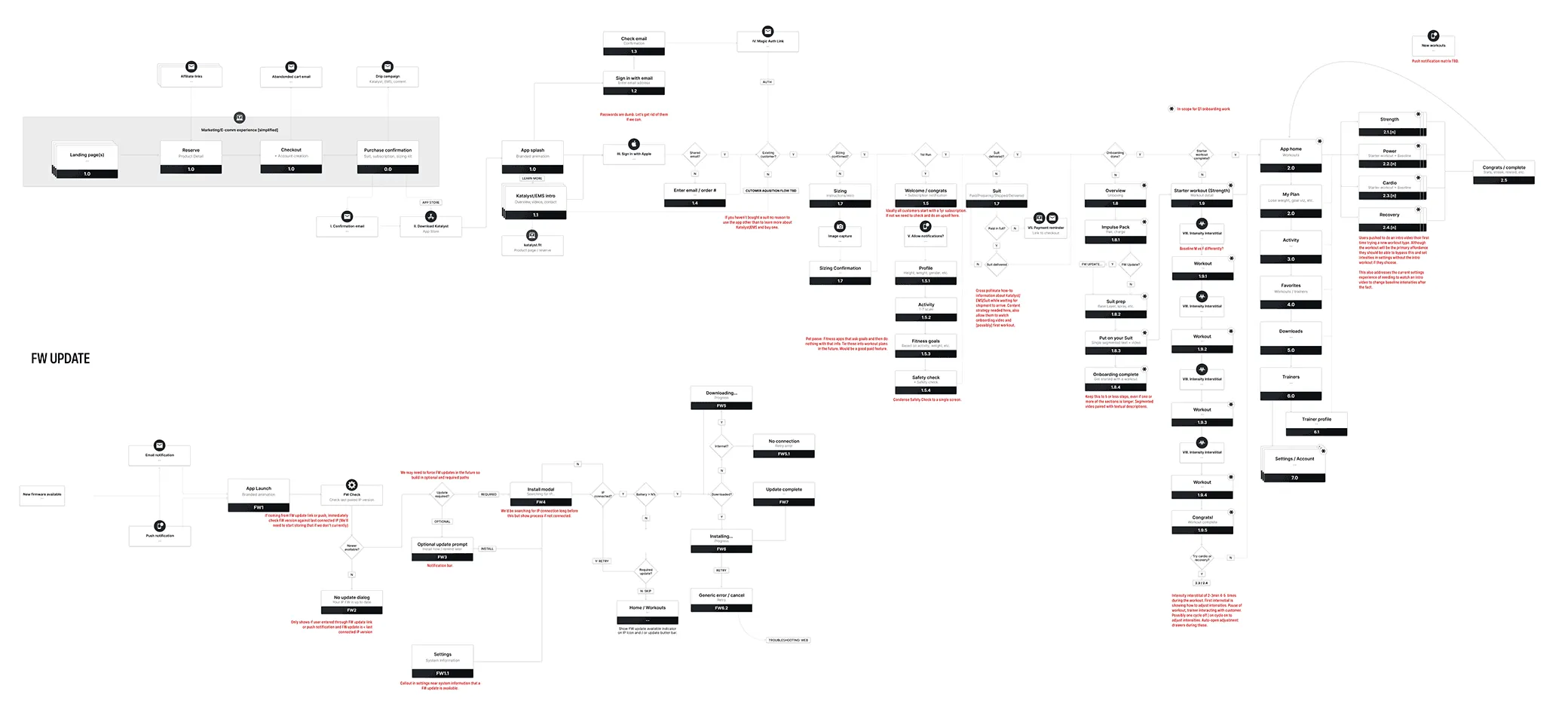
02/08I worked with the team, leadership, and customers to map out the architecture and user flow for the Katalyst platform. By initially investing considerable time in understanding the user, their fitness journey, and their interactions post-purchase, I built an empathetic and user-centric structure that served both the customer and the business. Using heuristic evaluations and customer feedback, I identified key points of friction that could impact the out-of-box and initial use experience.
Authentication tied to hardware
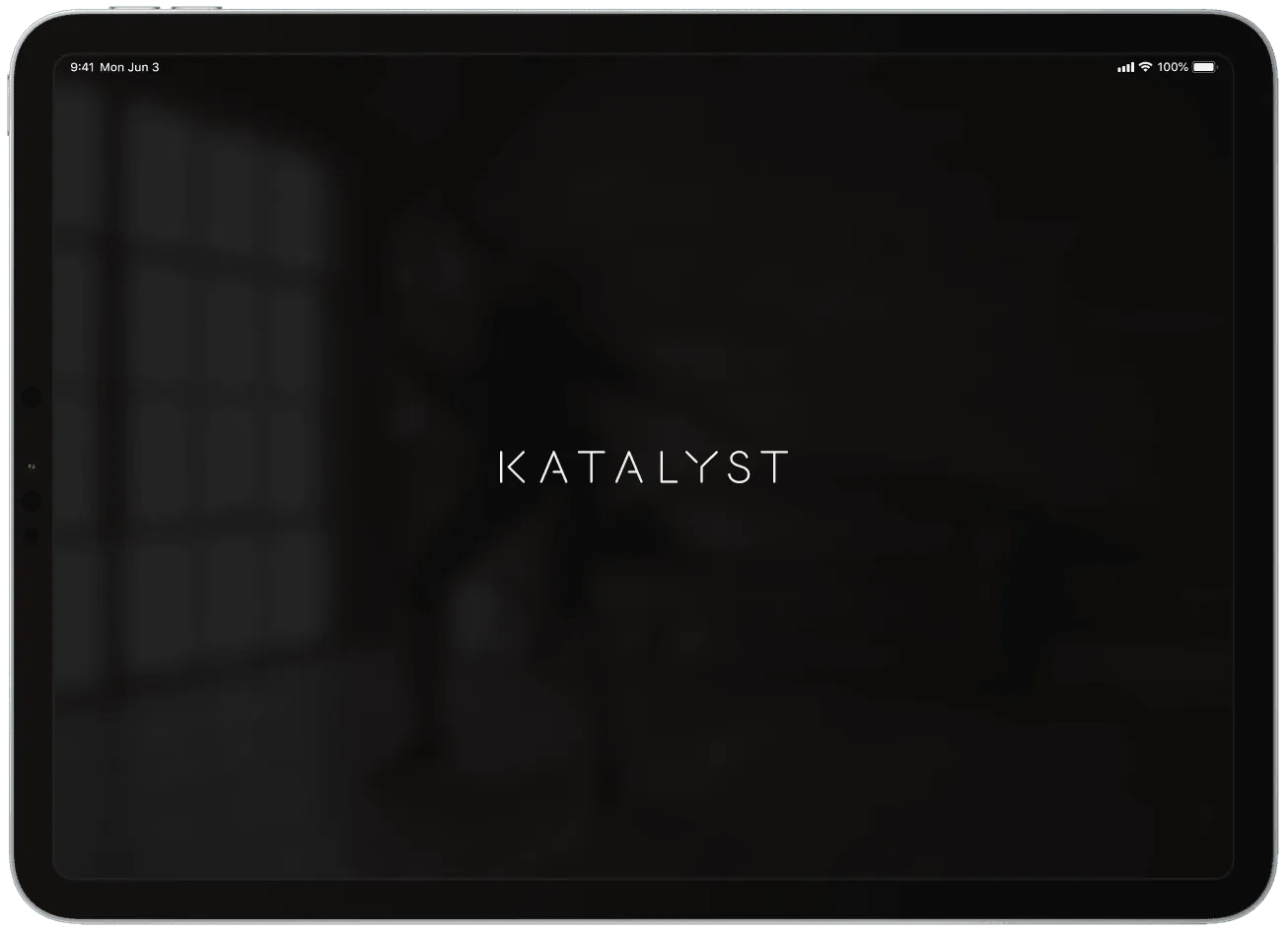
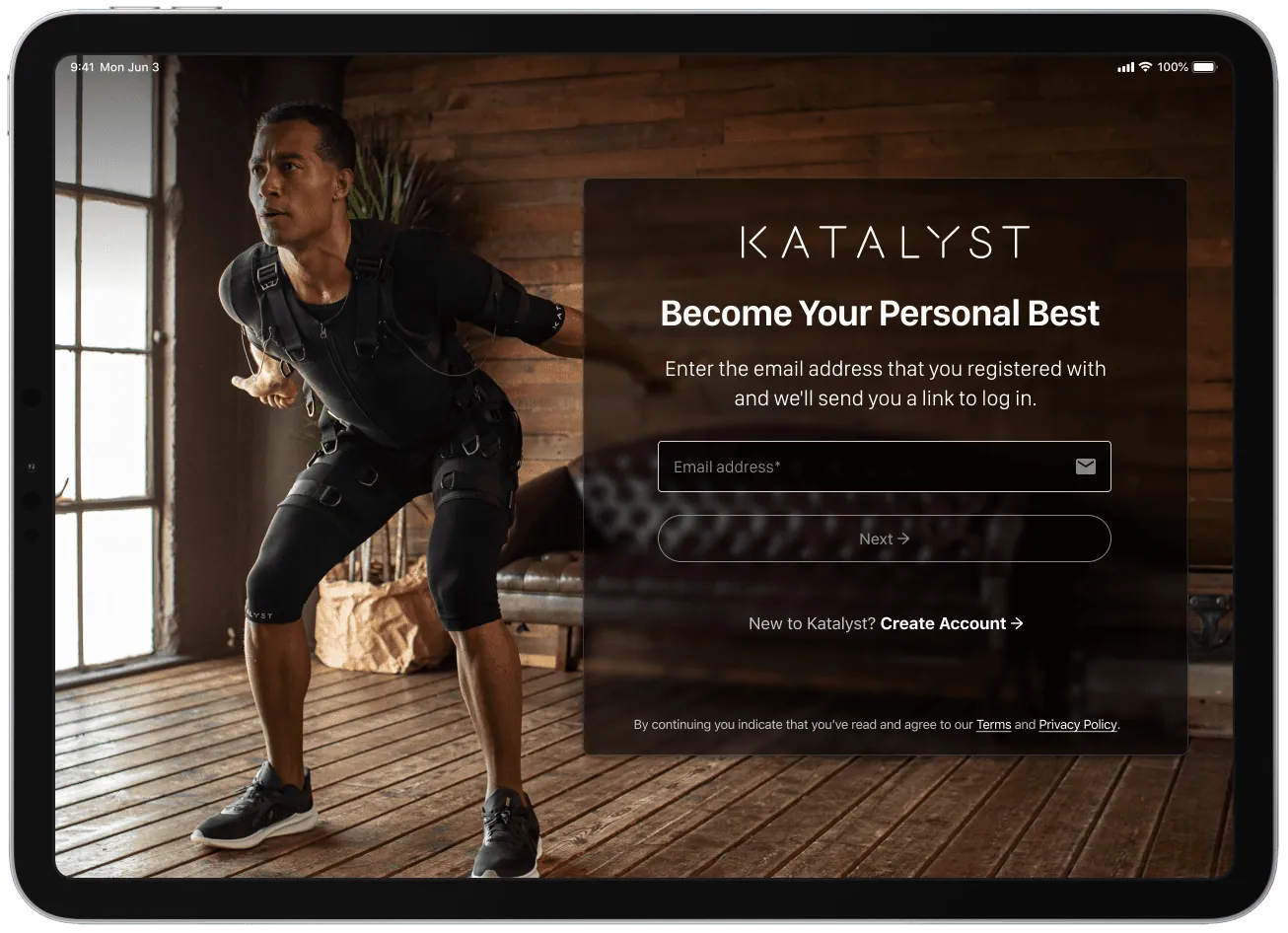
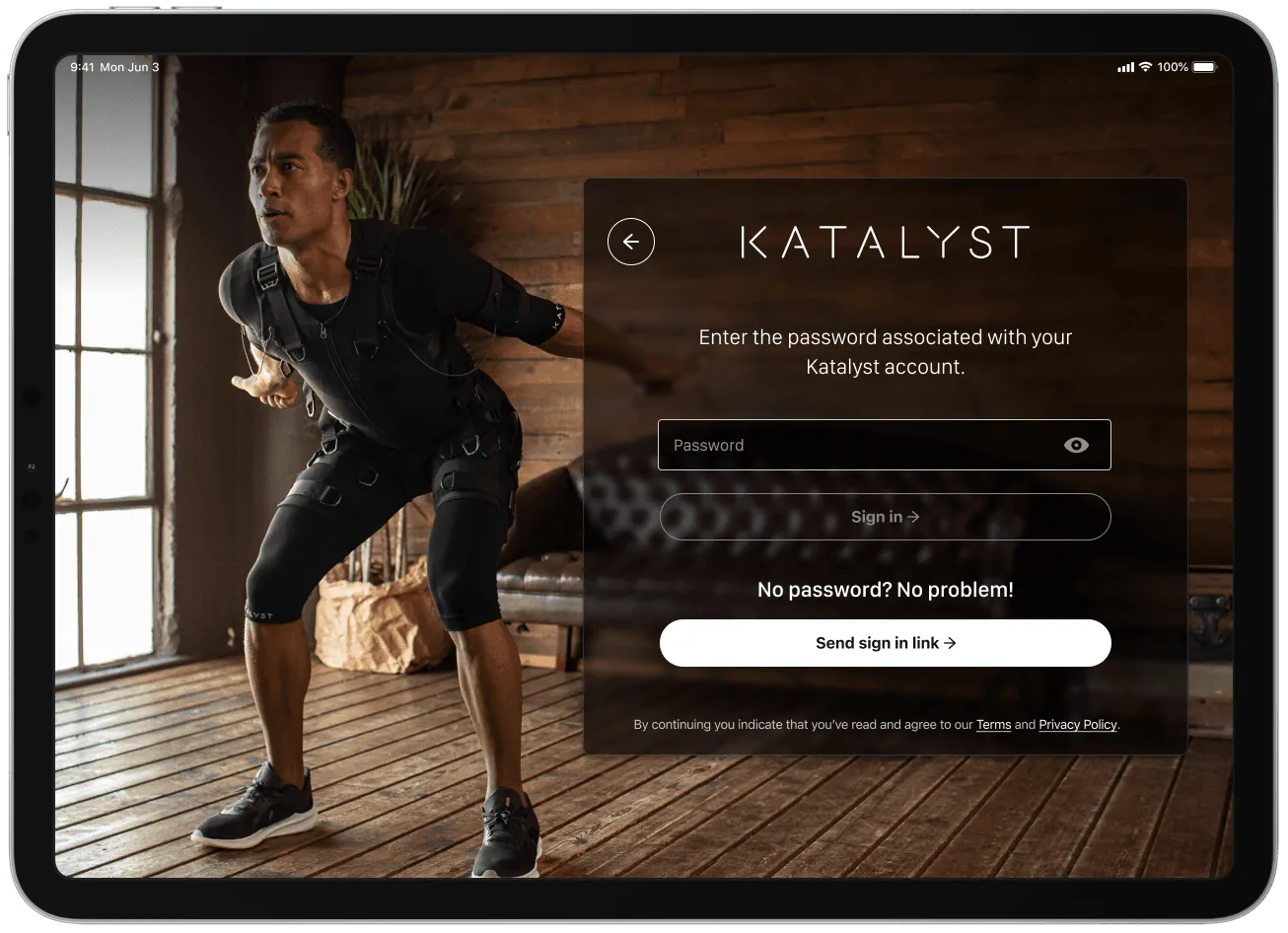
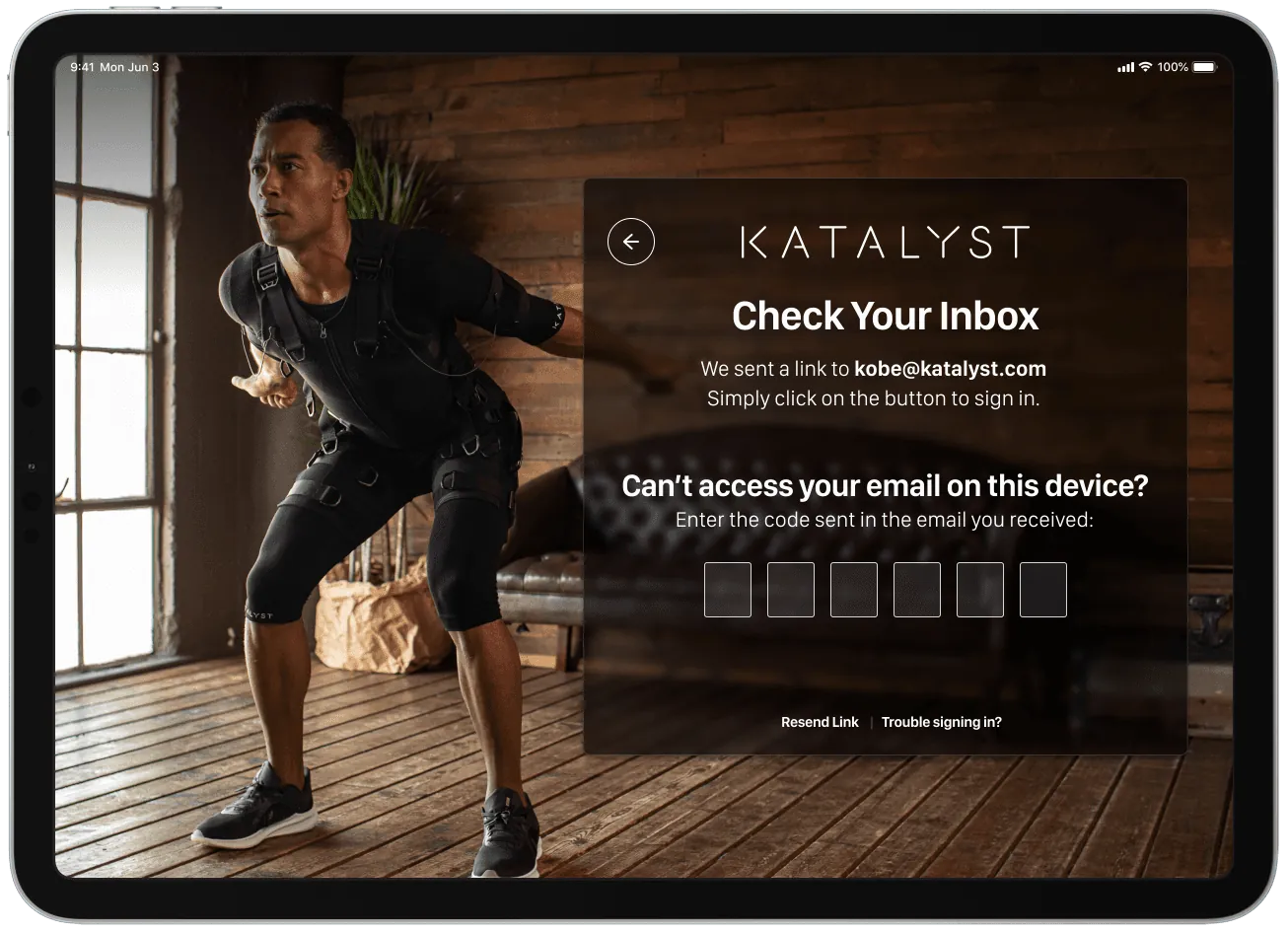
03/08Previously, there was no relationship between purchasing a Katalyst EMS suit and the first run experience with the software, a key piece of the platform that controls the impulses sent to muscle groups during a workout. Anyone could download the app, create an account, and be completely frozen without a suit and impulse pack connection. The first order of business was to tie purchase identification to the initial software experience. We still left the app open to download for anyone, but set the stage for it being another customer acquisition channel for hardware.
Profile setup
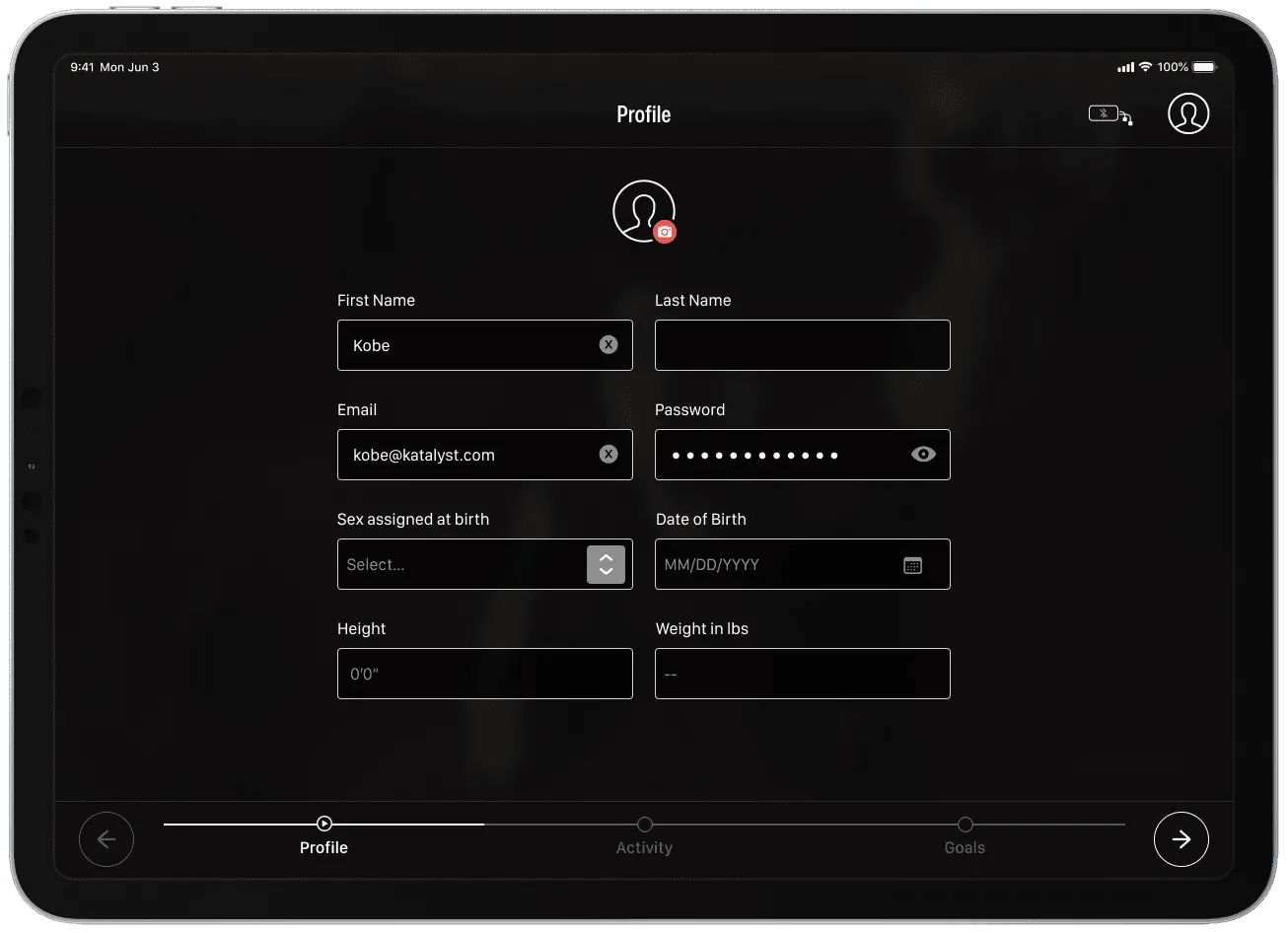
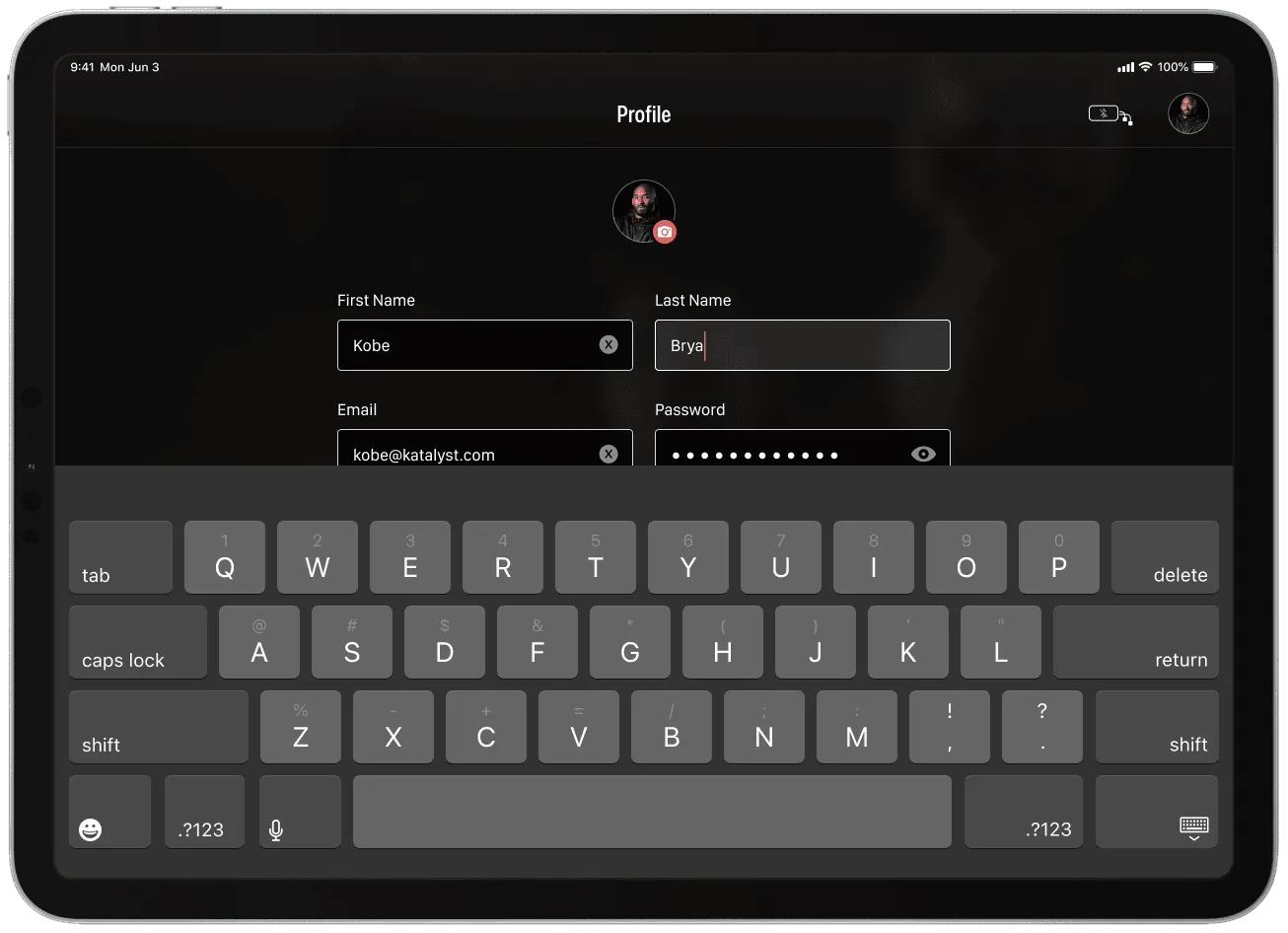
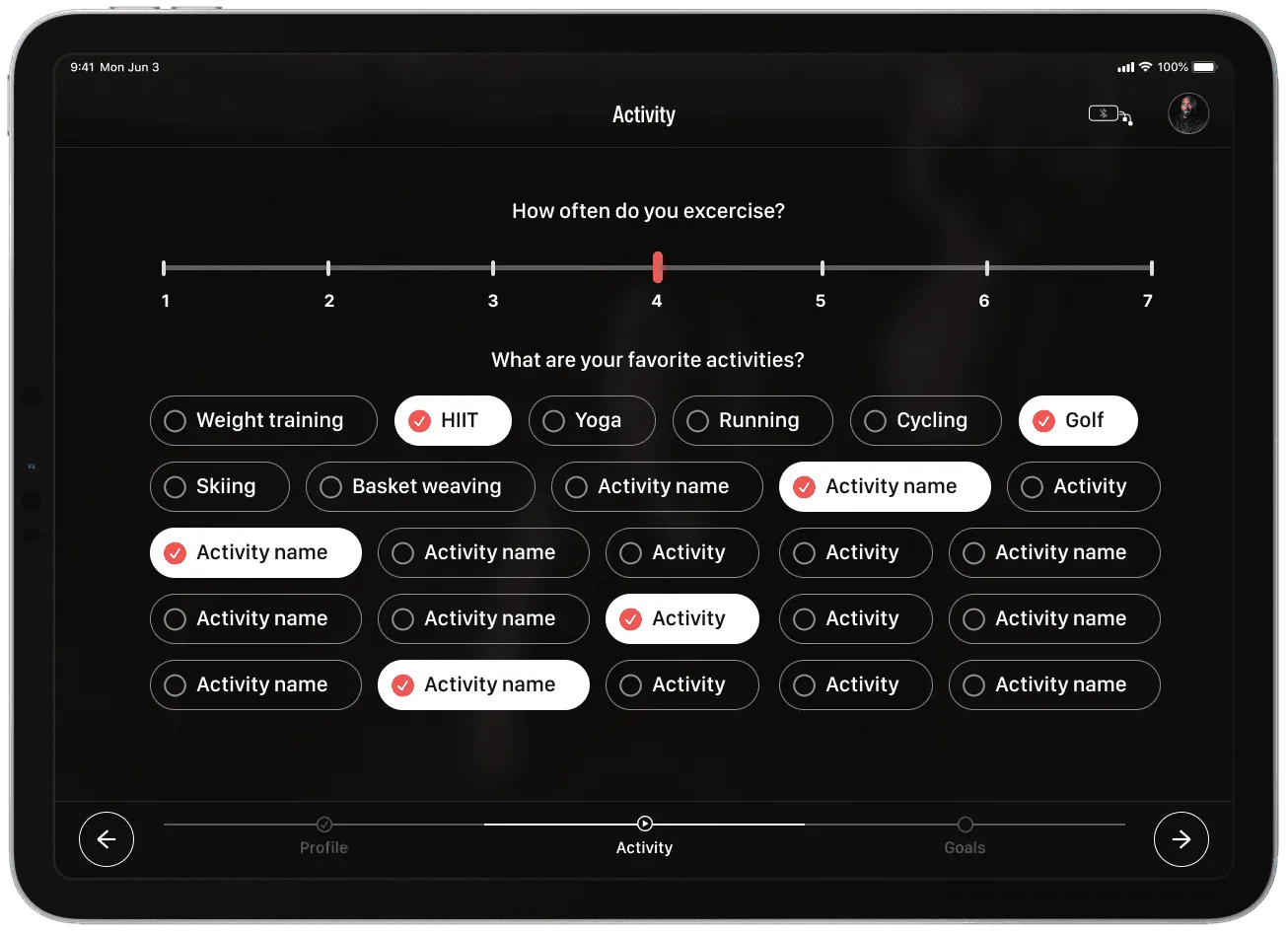
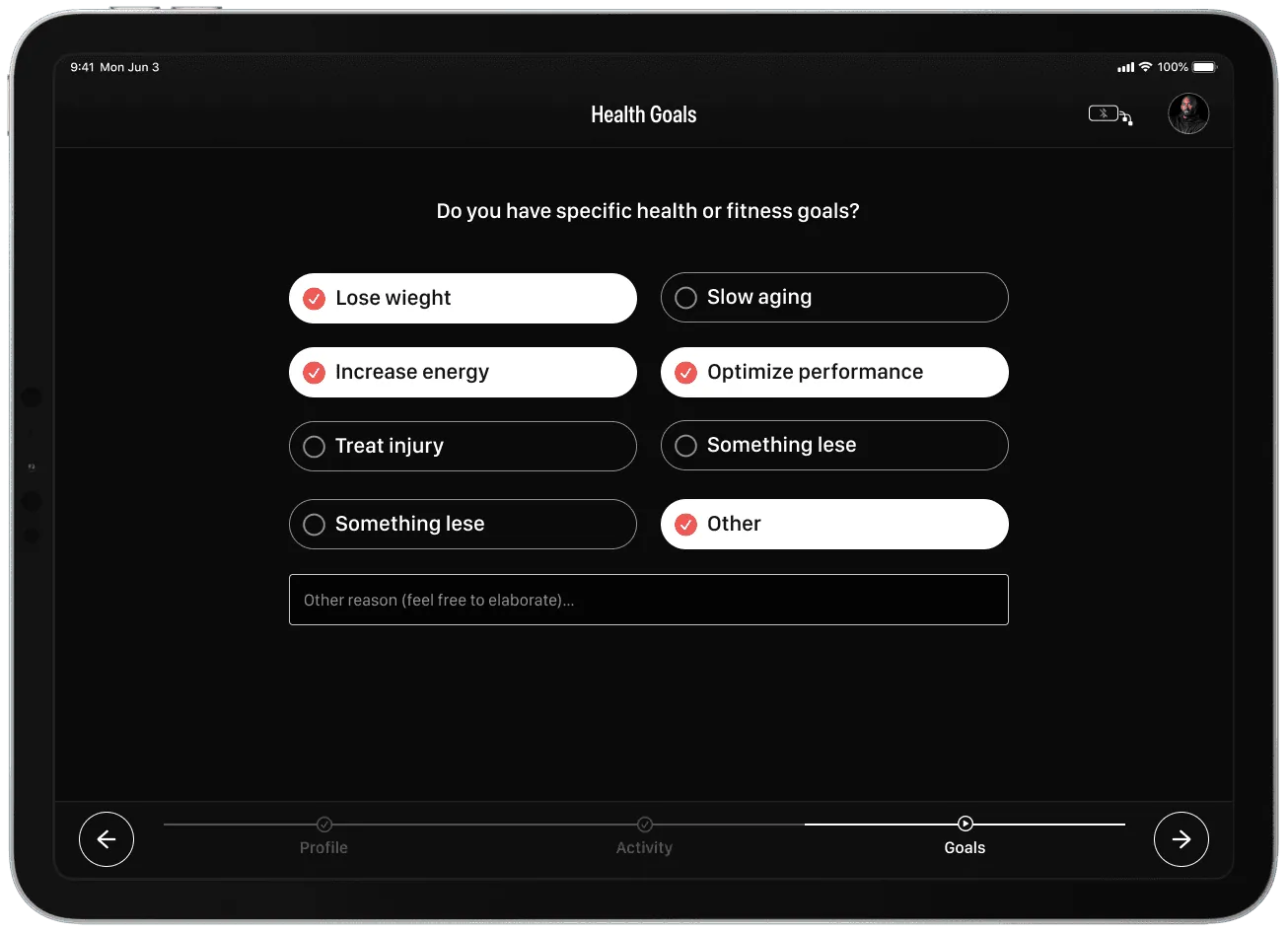
04/08The initial version of the Katalyst software experience was just a wall of general workouts not tied to any customer data. I created a seemingly simple, yet integral profile creation experience as part of a customer's first run that collected key data. This helped set their starting intensity as well as their self-assessed fitness level and preferred activities.
First-run connection and updates
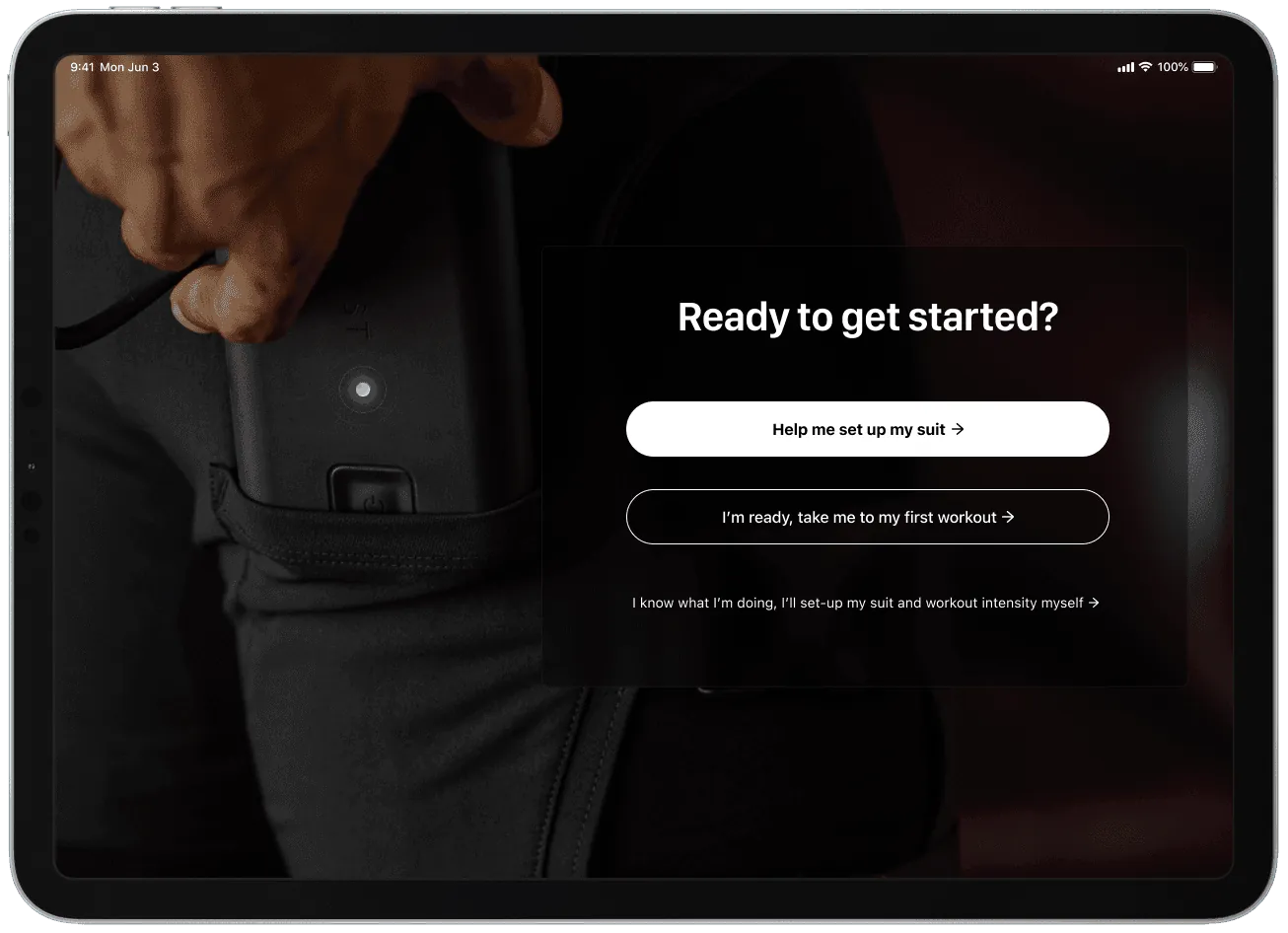
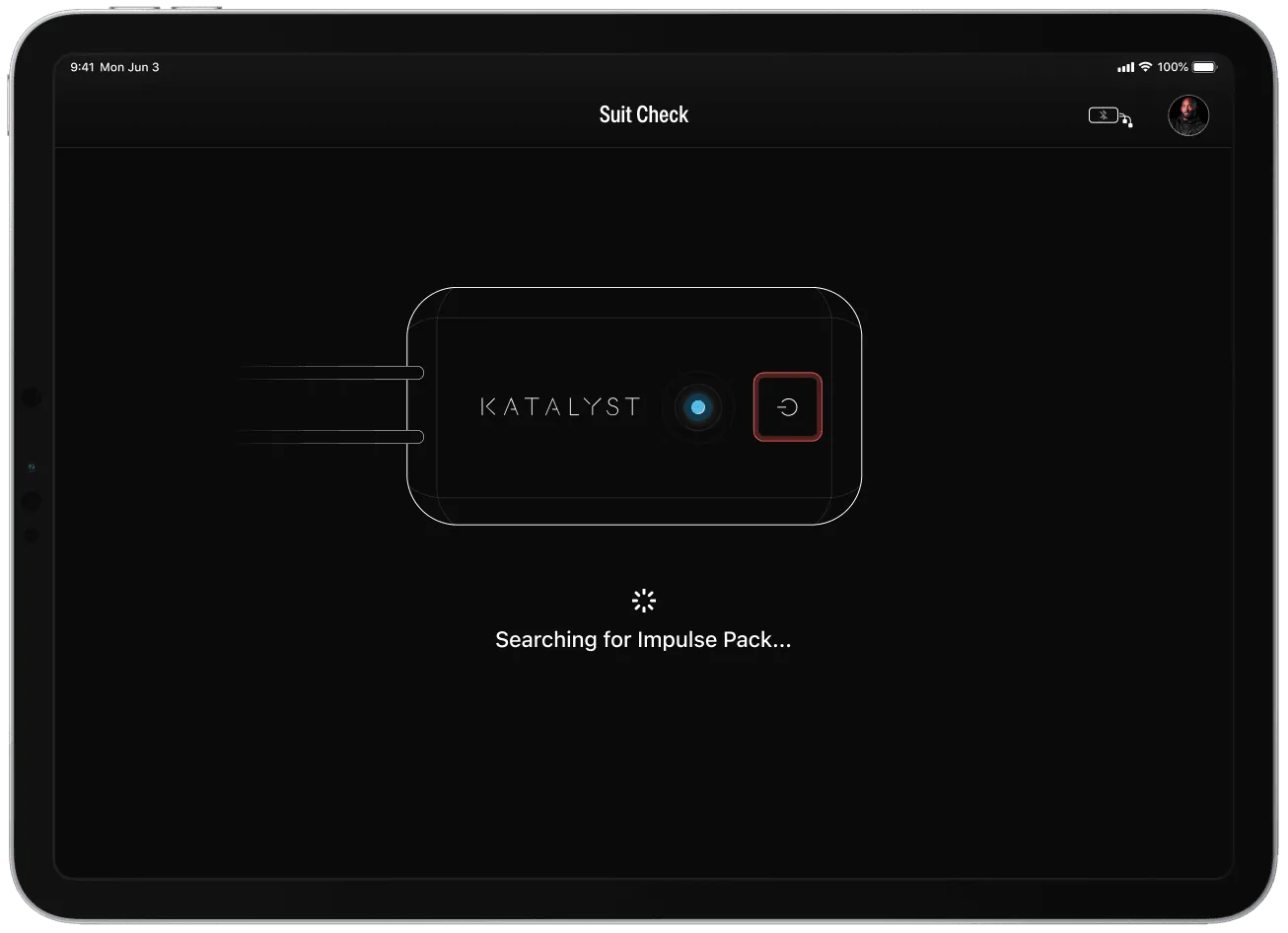
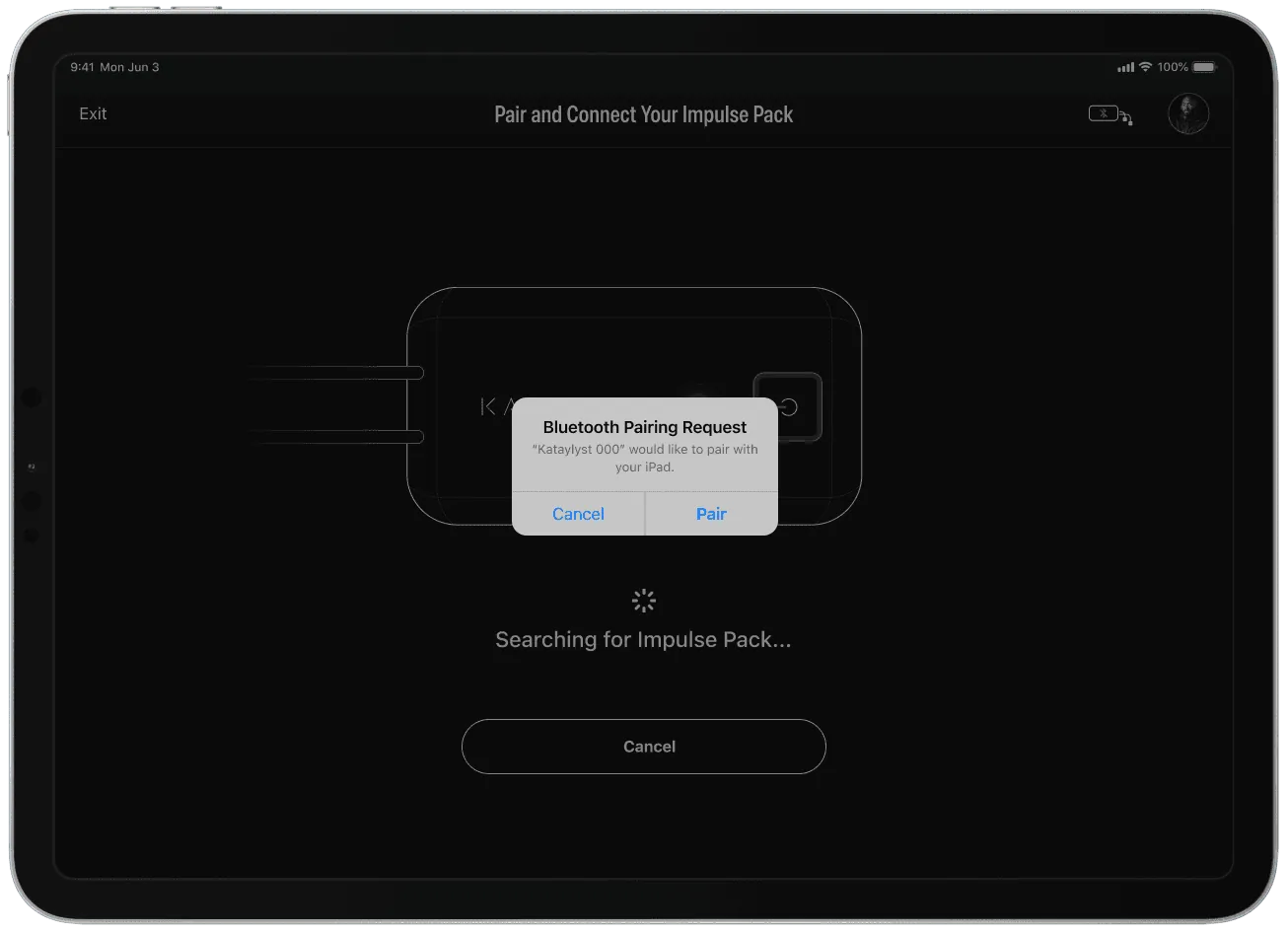
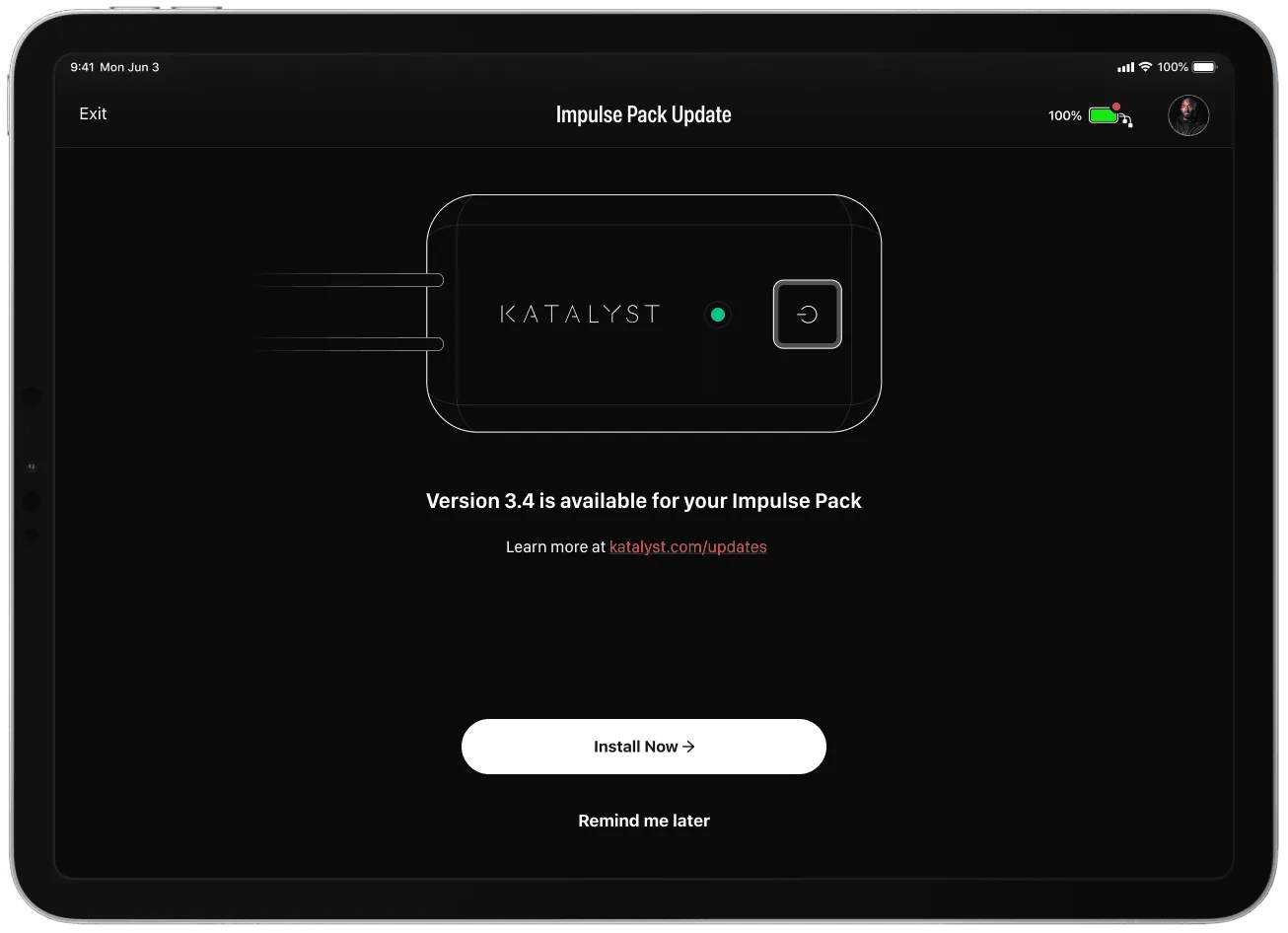
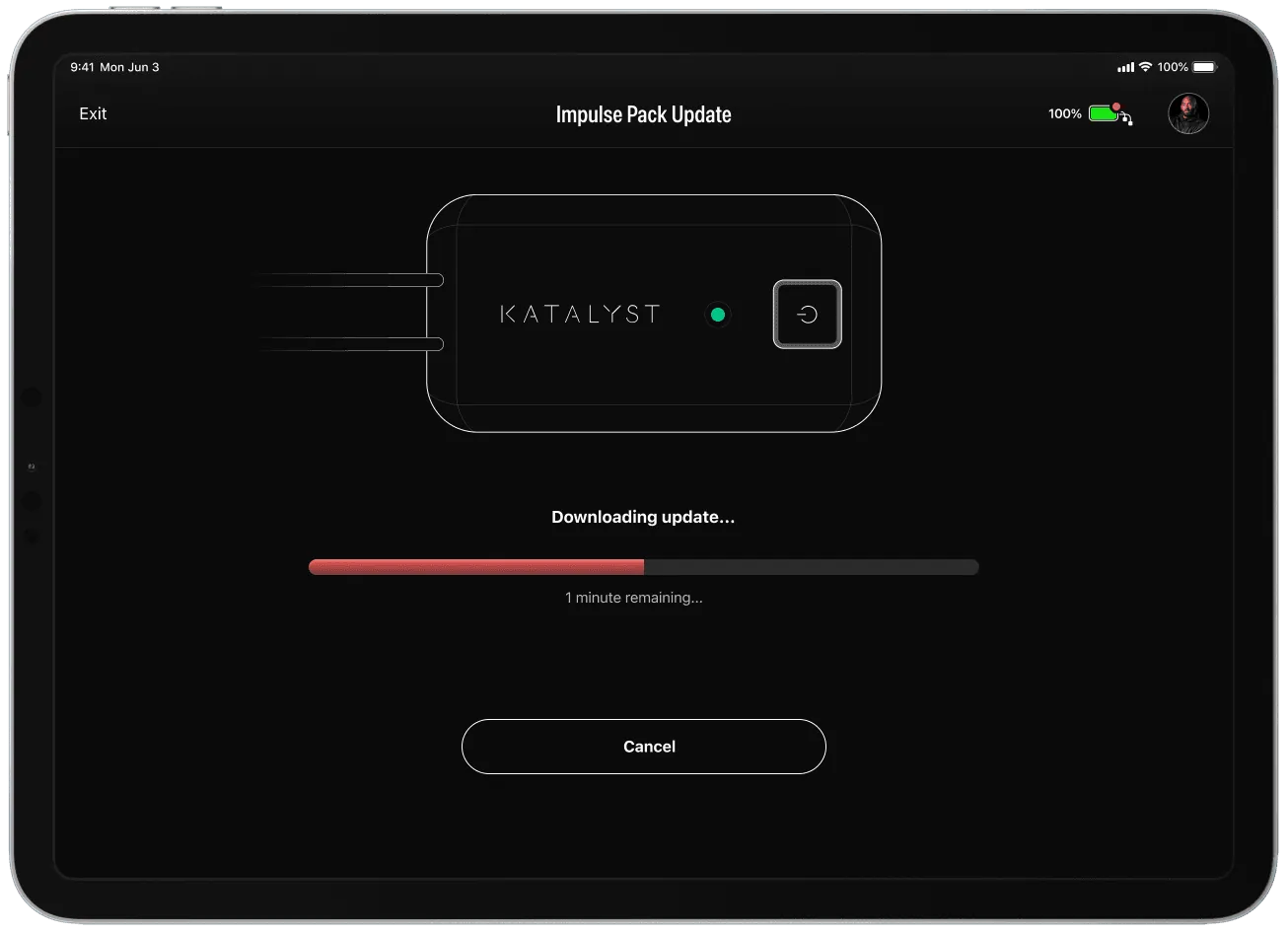
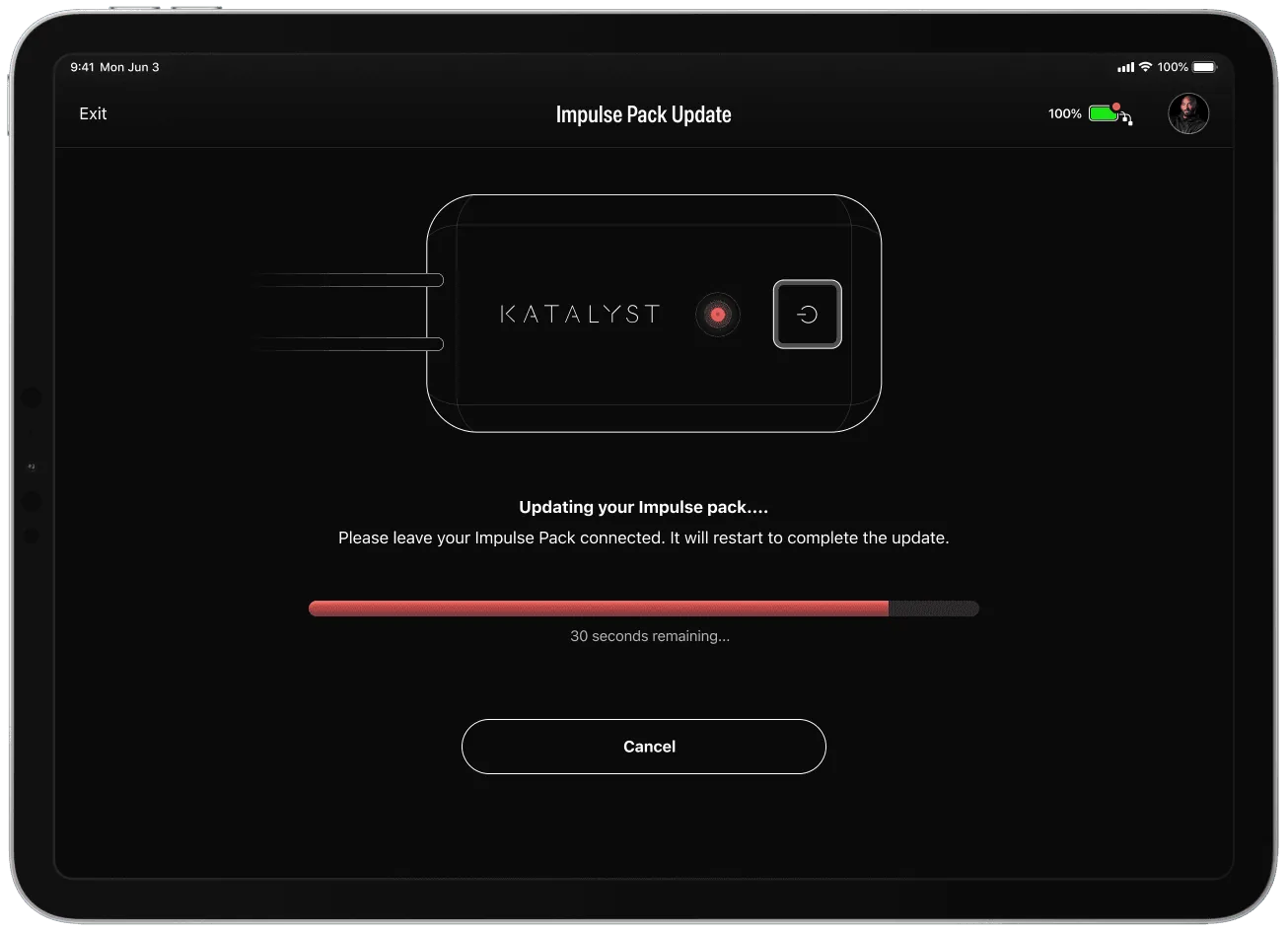
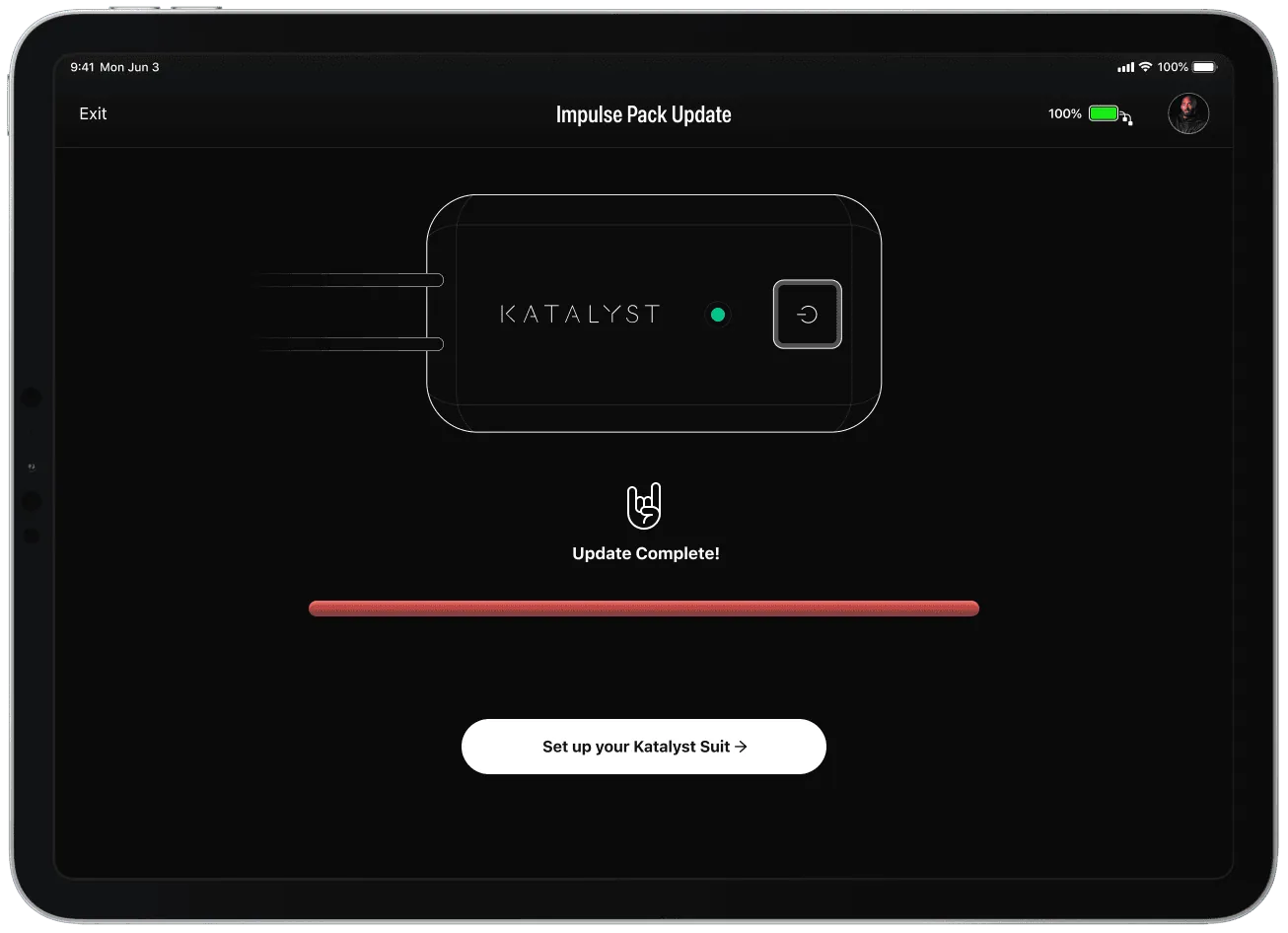
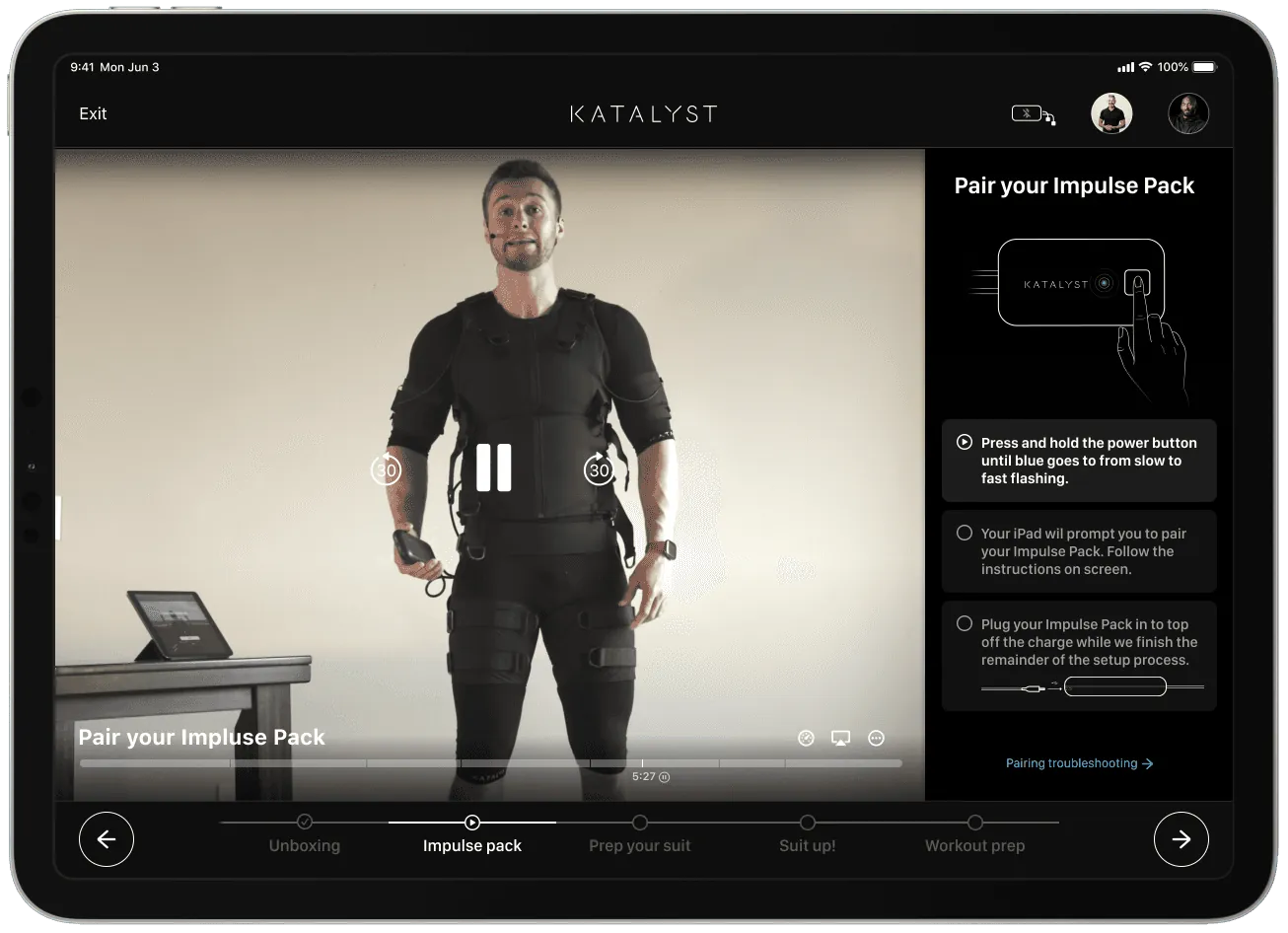
05/08The Impulse Pack is the heart of the Katalyst system. It connects wirelessly to a customer's iPad and controls the impulses sent to muscles during a workout. Without it, you are left with a heavy strapped down suit that does little. Previously there was no ability to do over-the-air firmware updates, and the first pack connection came after you wet all the pads on the suit and strapped it on. If something went wrong it left a catastrophic taste in the customer's mouth. Instead, on first run we prompt to connect the pack immediately, check for firmware updates, and make sure everything is functioning.
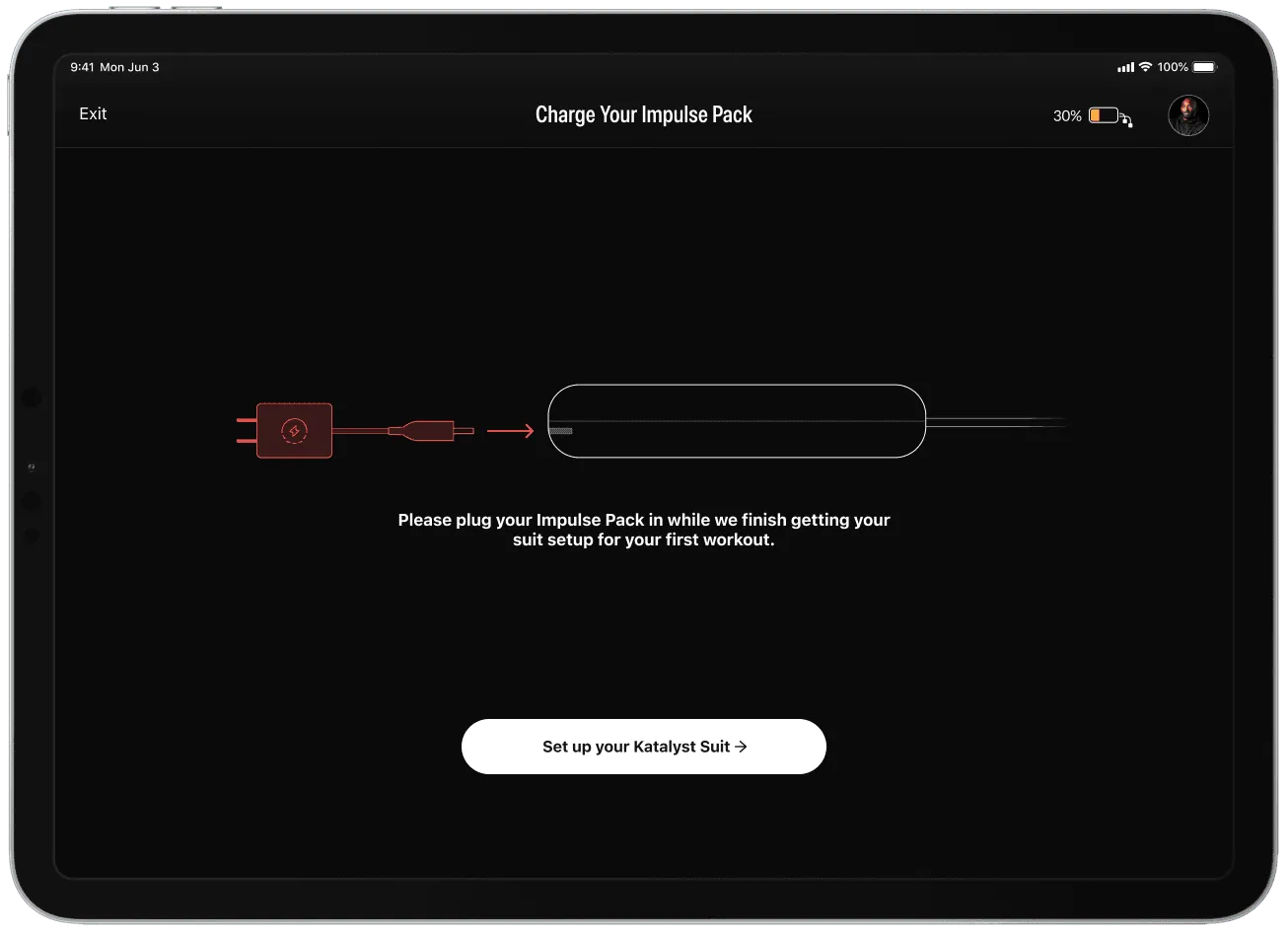
Out of the box
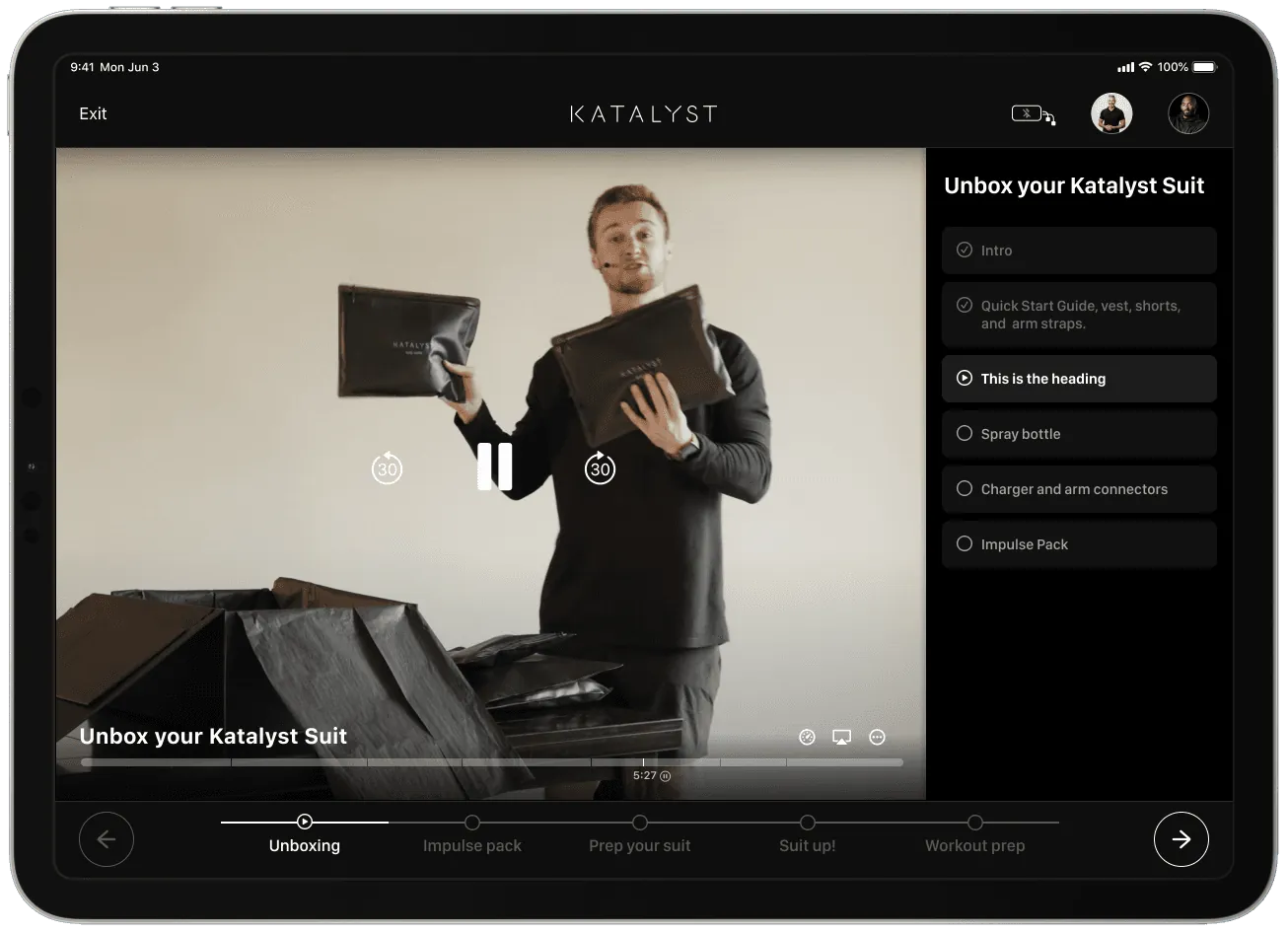
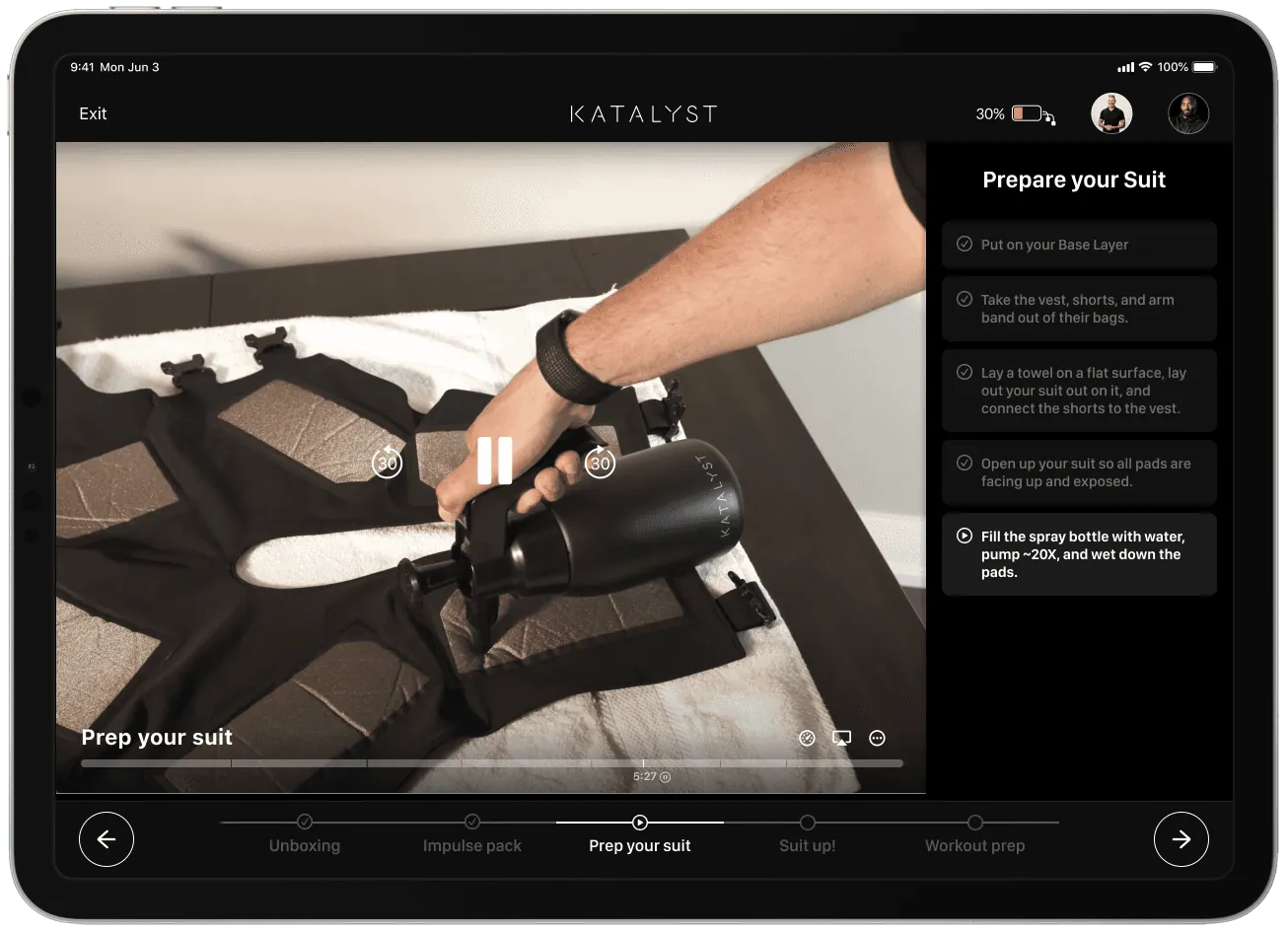
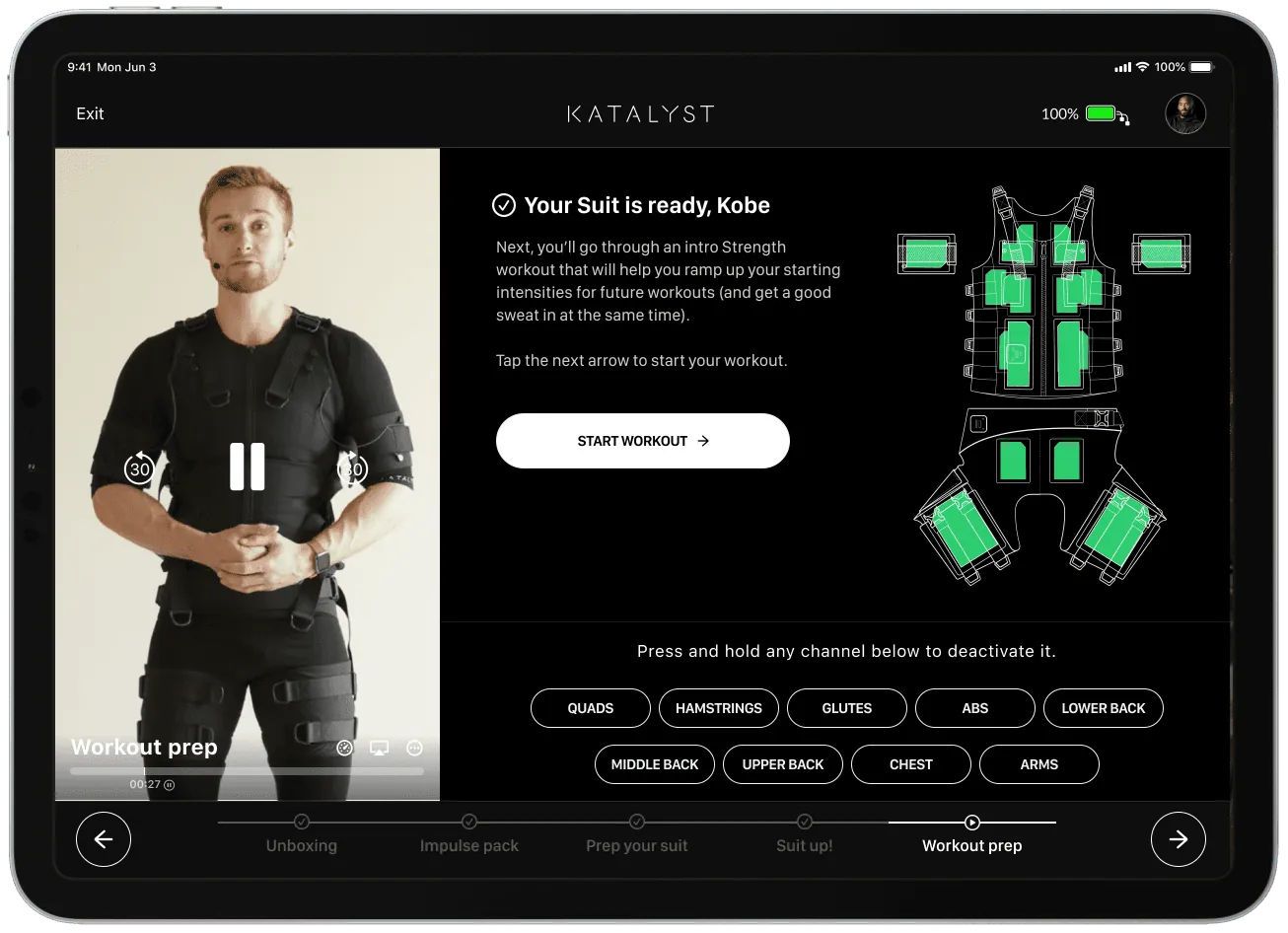
06/08The Katalyst experience is one most people have never felt. You take out a vest, arm straps, and shorts that have to be buckled tight to your body. But first, you have to wet down all the pads inside that send impulses to muscles. Previously, onboarding was done in person at demos or over Zoom calls. As the company and customer base grew, this was clearly not scalable. I worked with the team to develop a walkthrough for unboxing, suit prep, setup, and checks. Rather than a single long video, we built a simple UI around it so users could skip, pause, or just read through the instructions.
Starting intensity and the first workout
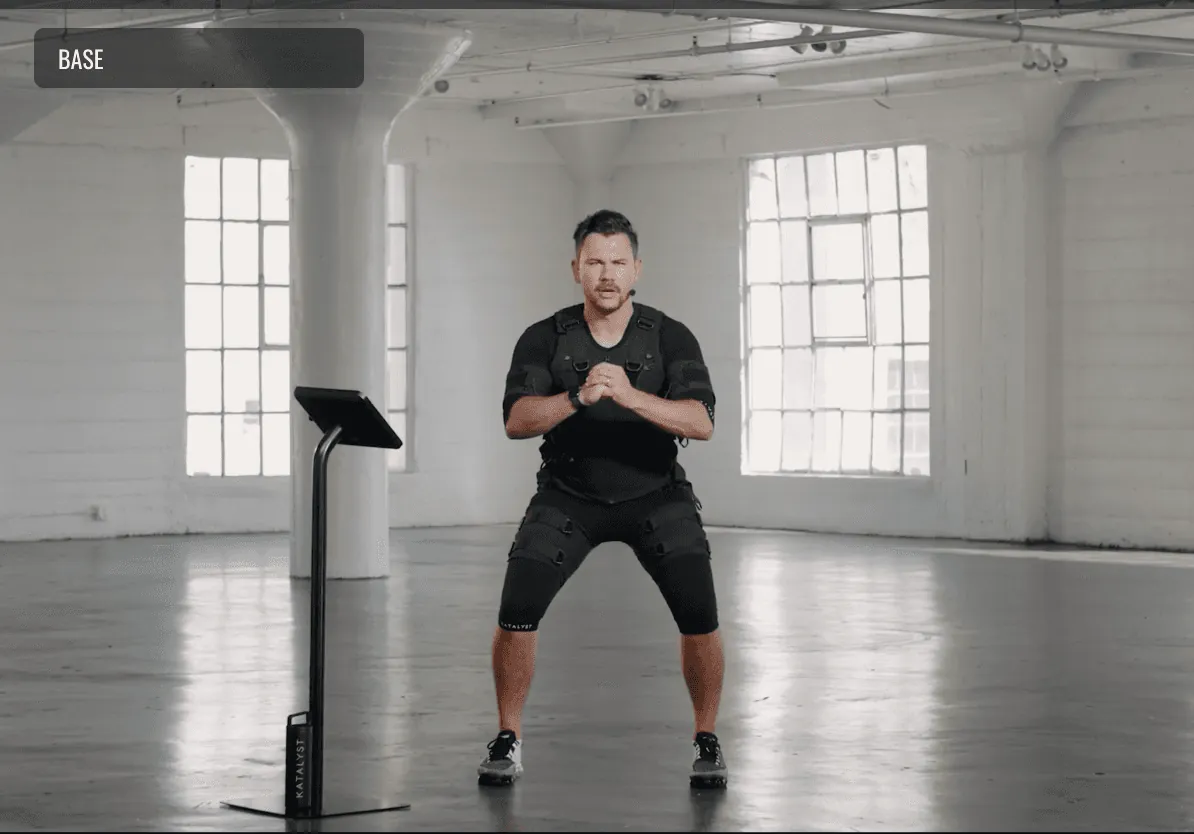
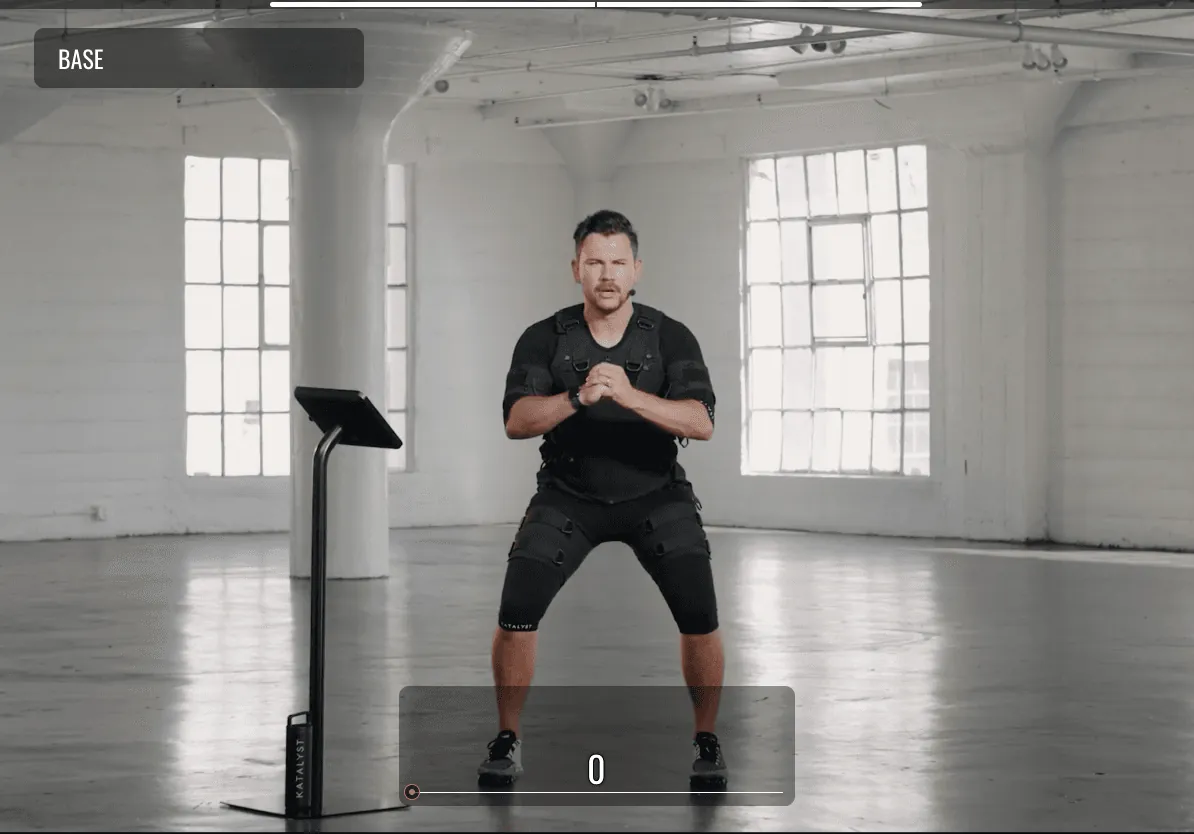
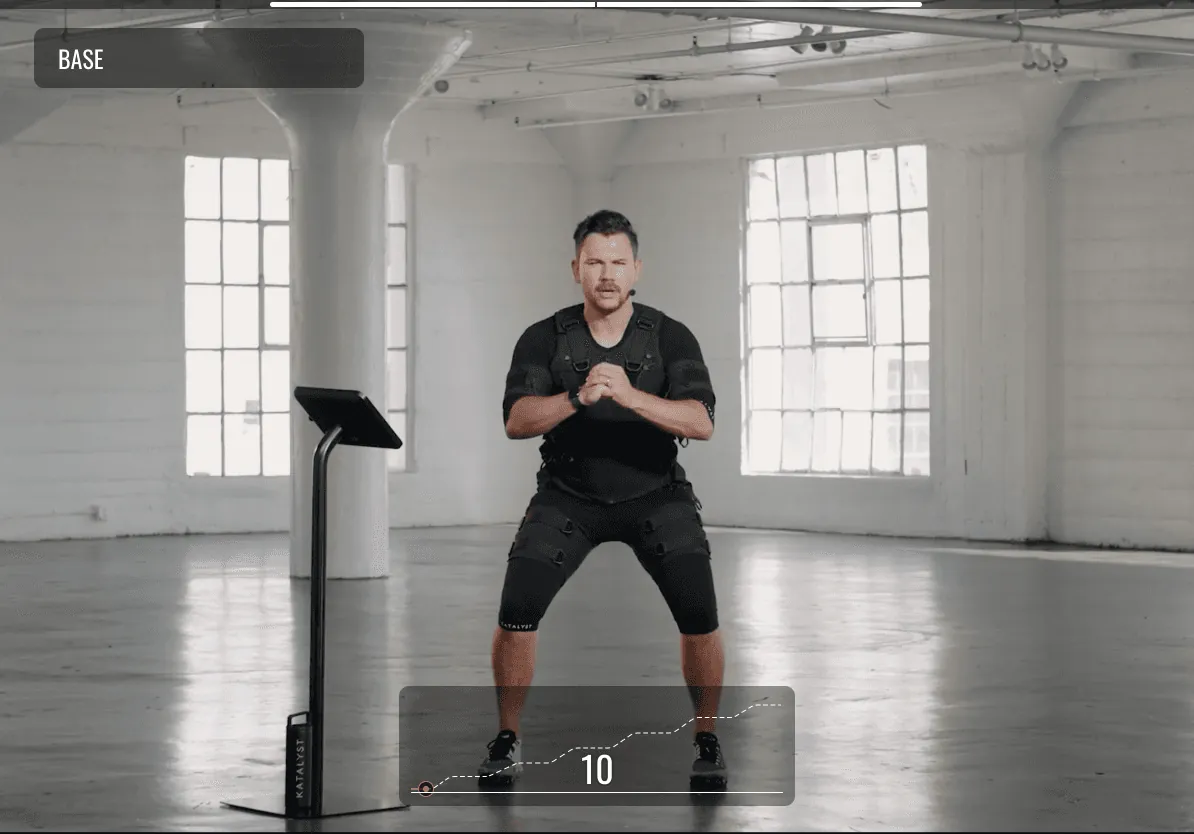
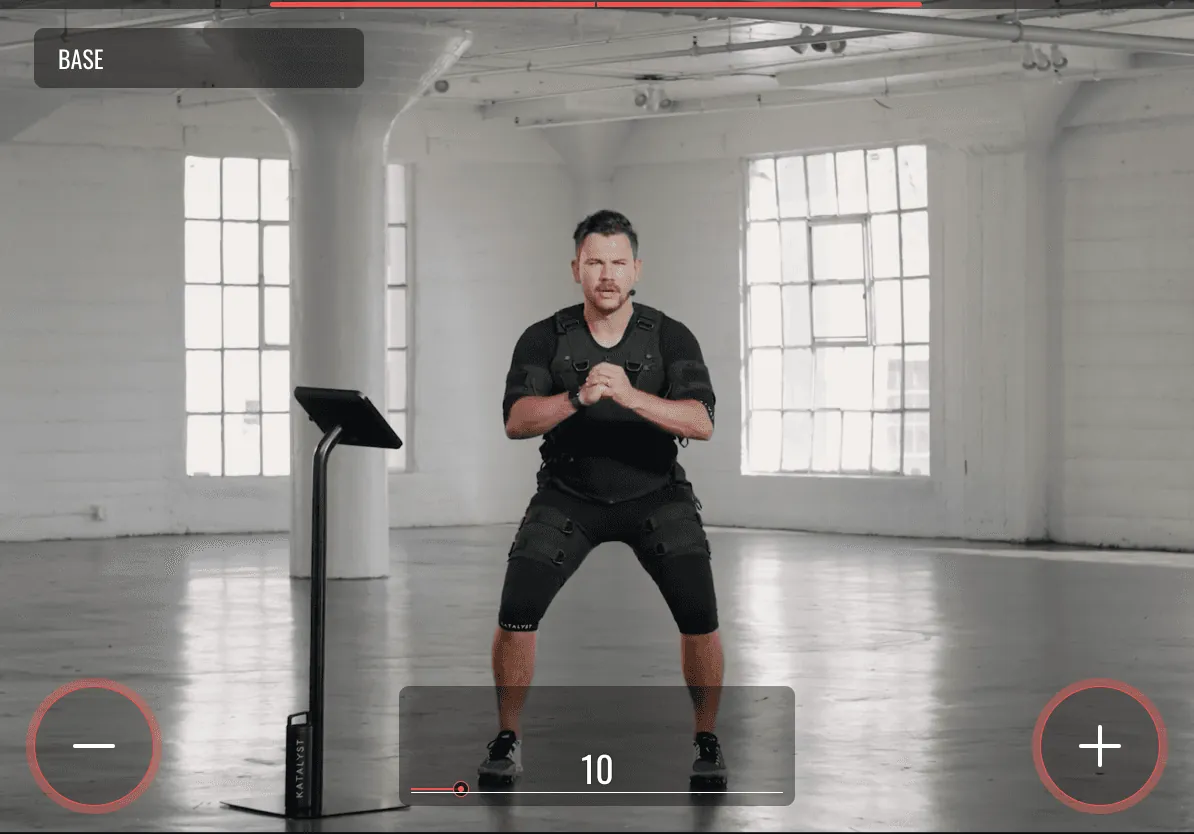
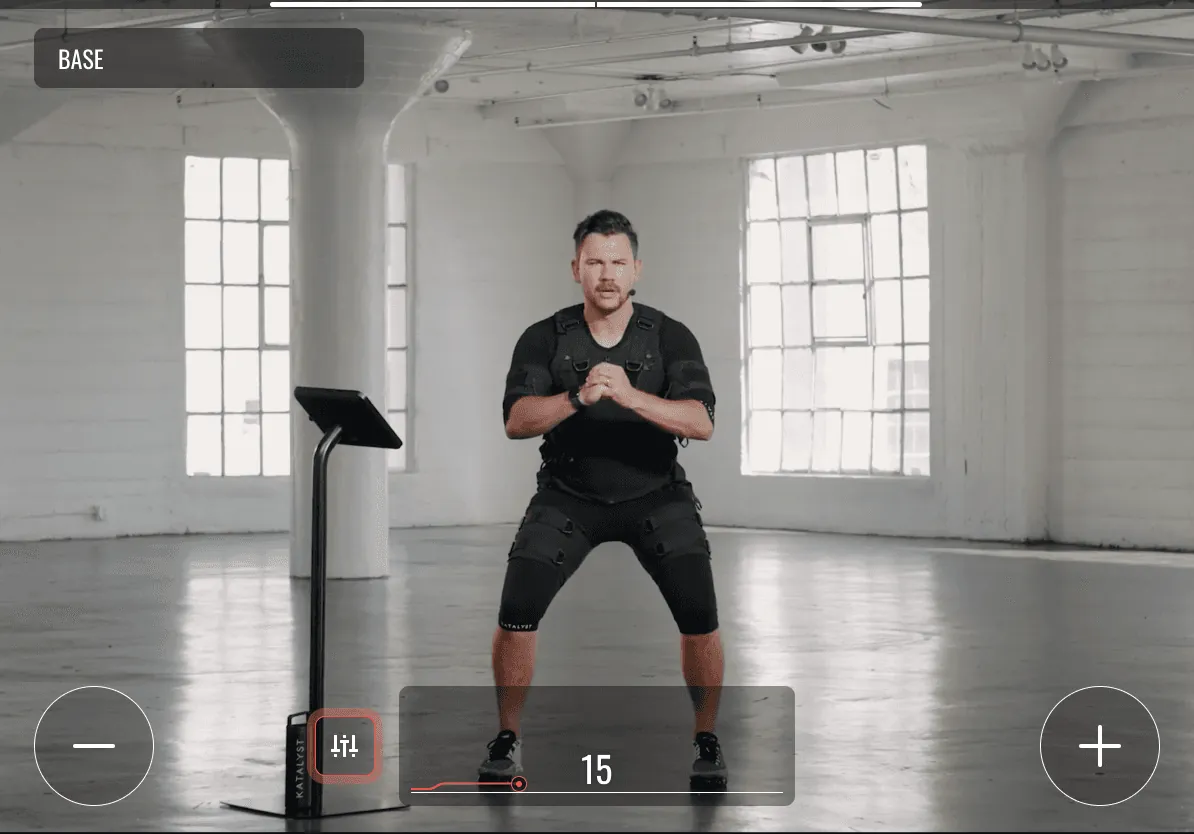
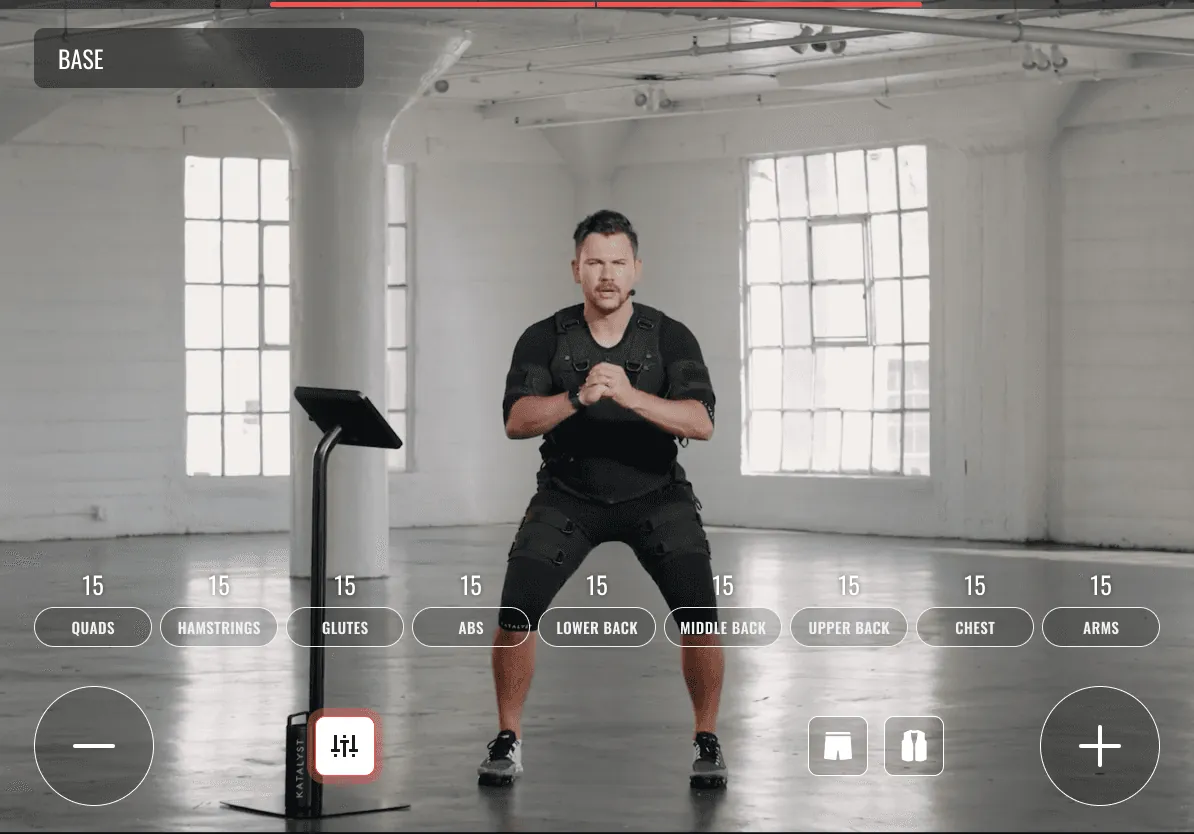
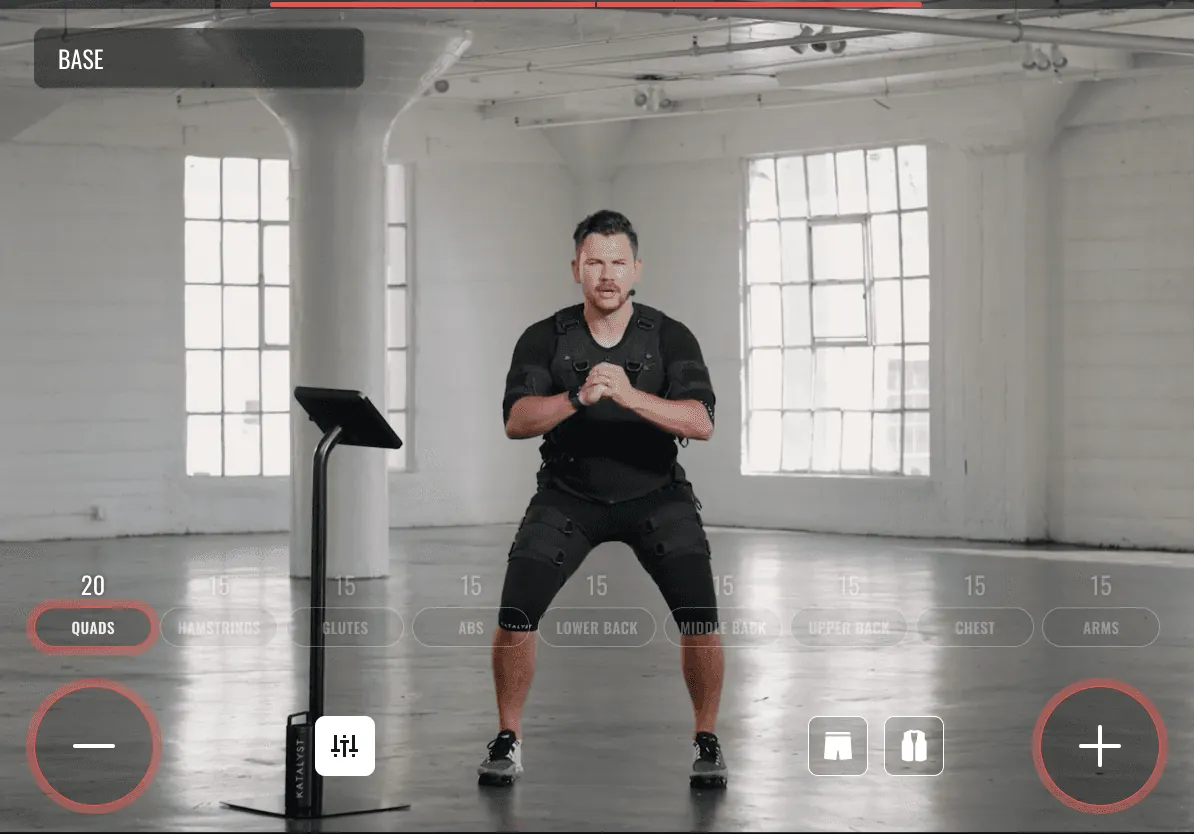
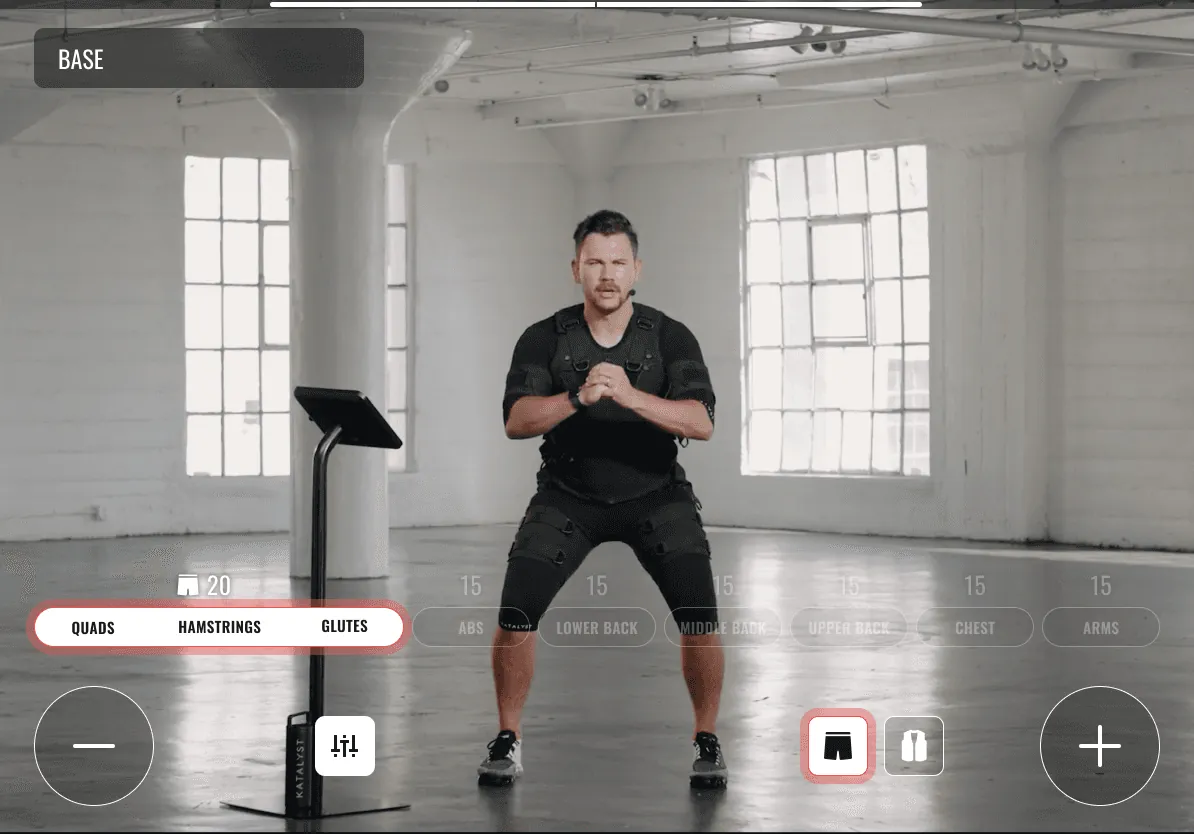
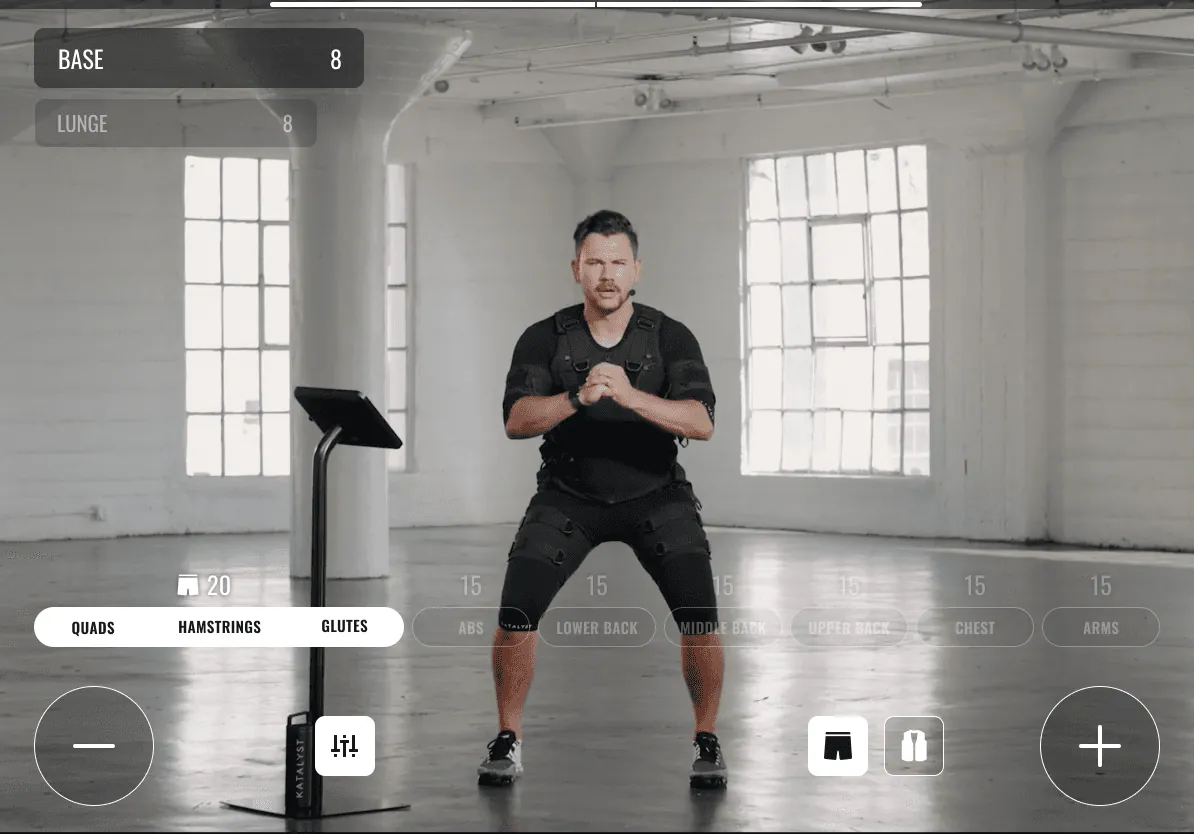
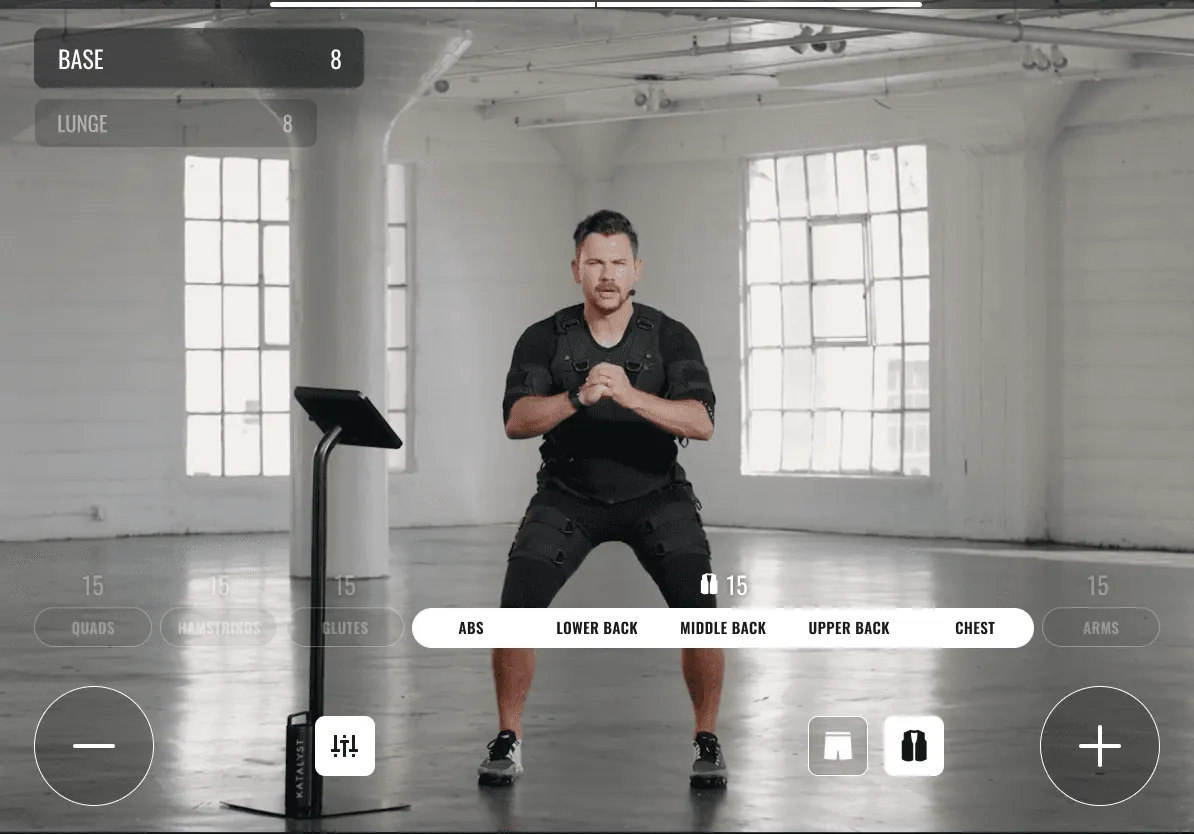
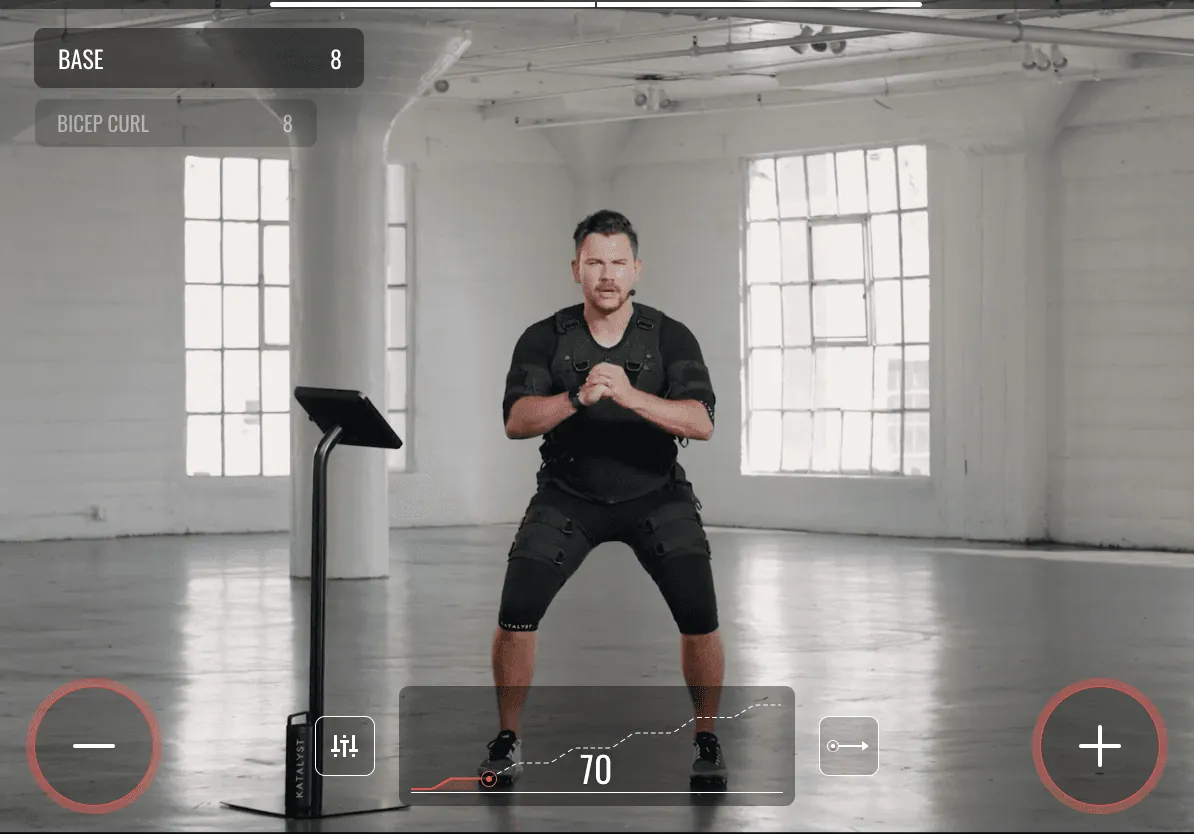
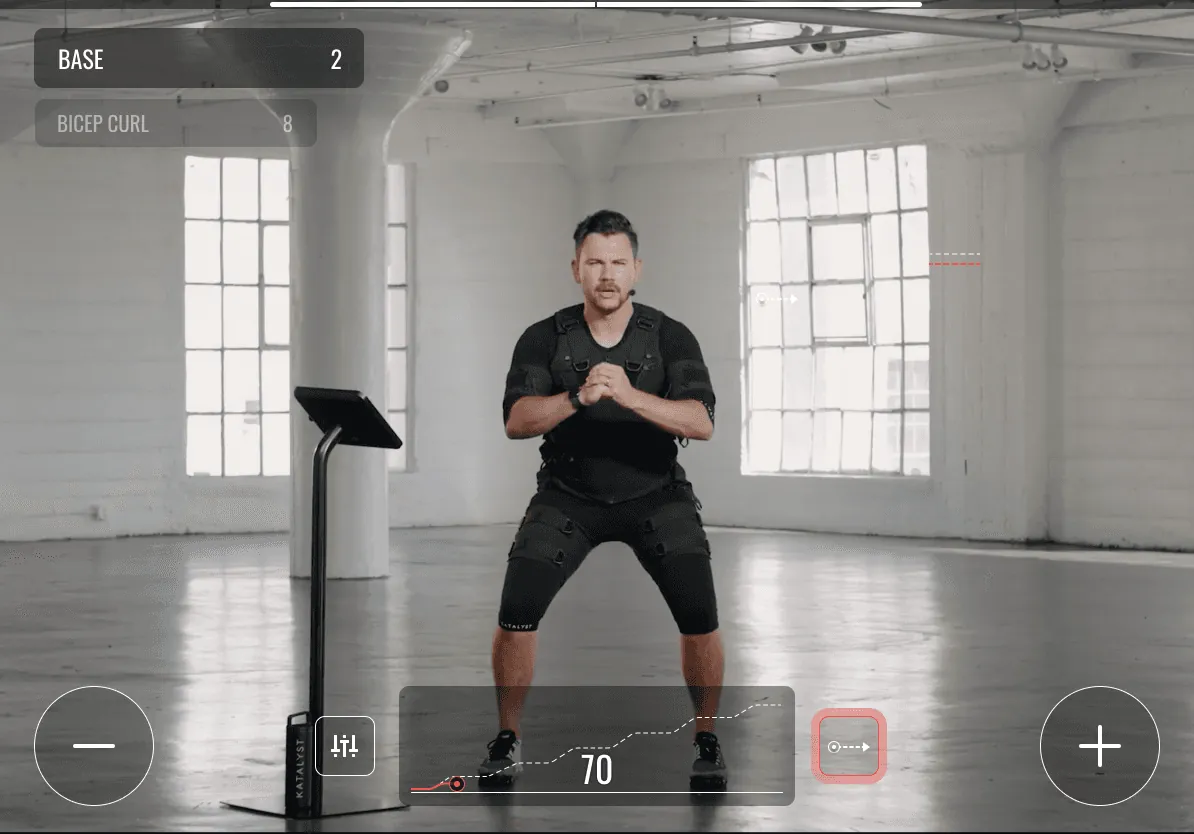
07/08The intensity of the impulses dictates how much resistance is simulated in the muscles. It is an odd sensation at first that can feel jarring. The goal is to get customers from an impulse to an actual muscle contraction, and then to a reasonable starting contraction that grows over the workout. The data showed that when starting intensities were set correctly, customer success and continued use rose sharply while support calls dropped. Almost all Katalyst users set their starting intensity far too low, which leads to feeling as though the product is ineffective. Leveraging the workout UI, I worked with the trainers and the customer team on a video script and introductory workout that set the appropriate starting intensity based on demographic details.

Outcome
08/08-
Onboarding moved off in-person demos and Zoom calls into a self-service walkthrough that scaled with the customer base.
-
Setting starting intensity correctly raised customer success and continued use, and cut support calls sharply.
-
Over-the-air firmware updates shipped, and the first pack connection moved ahead of suit prep so failures surface before a customer is strapped in.